

Skin Tag Removal in Nagpur
Home / Services / Skin / Skin Tag RemovalSkin tags, known medically as acrochordons or fibroepithelial polyps, are small, soft, benign growths that project from the skin surface on a slender stalk. They frequently appear in friction-prone areas such as the neck, armpits, groin folds, and eyelids. While skin tags are harmless, they can cause physical discomfort when caught on clothing or jewellery, or become an aesthetic concern. Dermatologists evaluate each lesion to confirm it is benign before performing removal using radiofrequency ablation or surgical excision under local numbing, or targeted cryotherapy.
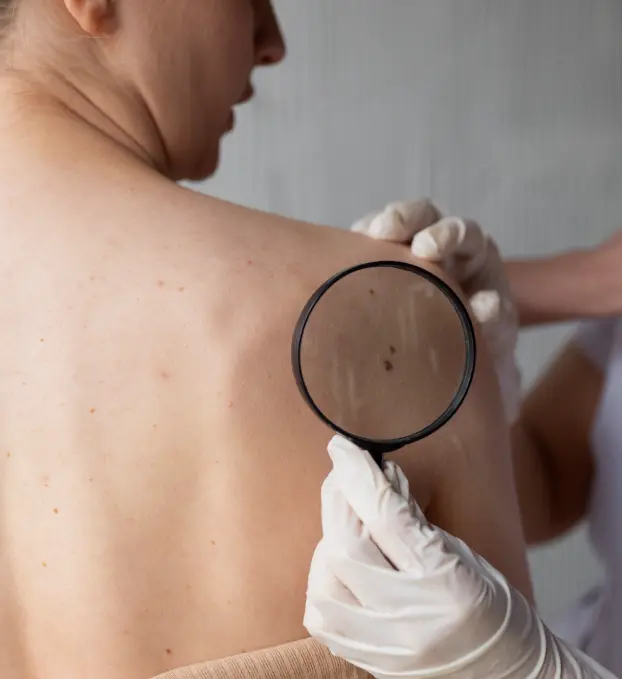
Treatment Quick Facts
- Fact 01Best For
Irritated, snagging, or cosmetically concerning skin tags on the neck, eyelids, underarms, or body.
- Fact 02Approach
Minor in-clinic removal via radiofrequency ablation, surgical snip excision, or cryotherapy.
- Fact 03Anaesthesia
Topical numbing cream or local anaesthetic infiltration for excision and radiofrequency ablation.
- Fact 04Recovery
Superficial healing typically within 5 to 10 days; brief recovery period with immediate routine resumption.
- Fact 05Appointment Length
Confirmed at consultation depending on total lesion count and anatomical distribution.
- Fact 06Skin Tag Removal Price
Starts from ₹2,000; total pricing determined by lesion quantity, size, and procedural complexity.
What Are Skin Tags and What Causes Them?
Skin tags are harmless, non-cancerous skin growths made of loose collagen fibres and small blood vessels wrapped within an outer layer of epidermis. They usually attach to the skin by a thin stalk called a peduncle. While skin tags are not precancerous, careful medical evaluation by a dermatologist confirms the lesion's benign nature before any procedural intervention.
Mechanical Friction
Persistent friction where skin folds rub against adjacent skin or tight clothing, particularly along collar lines, underarms, inframammary folds, and the groin.
Hormonal Fluctuations
Elevated hormone levels during pregnancy frequently stimulate tag formation. Many pregnancy-associated tags naturally regress postpartum.
Genetic Predisposition
Familial tendencies play a clear role, as individuals with parents or siblings who have multiple skin tags are far more likely to develop them.
Metabolic Factors
Dermatological research strongly links multiple skin tags with metabolic markers, including elevated body mass index (BMI), dyslipidemia, and insulin resistance.
What Are the Symptoms and When Should a Doctor Be Consulted?
Most skin tags are painless and go unnoticed unless snagged by clothing, collars, or jewellery. When subjected to continuous rubbing, a skin tag can become irritated, red, swollen, or bleed. Occasionally, a skin tag may twist on its stalk (torsion), restricting blood supply and causing sudden tenderness while turning dark brown or black.
Friction & Snagging
Tags frequently catch on necklaces, shirt collars, seatbelts, or undergarments, leading to irritation, redness, local swelling, or light bleeding.
Torsion & Ischemia
Occasionally, a skin tag twists around its narrow peduncle, choking off blood supply. This causes sudden acute tenderness as the tissue turns dark brown or black.
Atypical Changes
Because thrombosed tags can resemble atypical growths, any spontaneous bleeding, rapid color change, or sudden expansion requires prompt dermatological evaluation.
Patients with diabetes or compromised immunity should always have inflamed growths in skin folds assessed professionally, as impaired circulation increases bacterial infection risks. Furthermore, self-removal through cutting, tying off with thread, or applying caustic home chemicals carries substantial risks of severe bleeding, scarring, and bacterial infections.
What Are the Treatment Options for Skin Tag Removal?
When removal of a skin tag is desired for comfort or cosmetic reasons, clinical methods are preferred over unverified home remedies. A dermatologist selects an appropriate technique based on lesion size, stalk width, anatomical location, and the patient's skin type.
| Clinical Feature | Radiofrequency (RF) Ablation | Minor Surgical Snip Excision | Targeted Cryotherapy |
|---|---|---|---|
| Mechanism | High-frequency electrical current divides stalk with instant capillary coagulation | Sterile fine surgical snip flush with skin under magnification | Sub-zero liquid nitrogen freezes lesion water, causing tissue sloughing |
| Best Suited For | Neck, armpits, inframammary zones, and delicate eyelids with shielding | Large pedunculated tags, wide-based stalks, and pathology candidates | Discrete small tags where electrosurgical currents are contraindicated |
| Anaesthesia | Topical numbing cream or local infiltration | Local numbing infiltration or potent topical anaesthetic | Usually none or brief surface topical numbing |
| Bleeding Control | Simultaneous vessel coagulation; minimal oozing | Managed promptly with light pressure or haemostatic agents | Non-incisional; zero procedural bleeding |
| Superficial Recovery | 5 to 8 days for pinpoint crusts to separate | 5 to 10 days for surface re-epithelialization | 7 to 14 days as frozen tissue shrivels and falls away |
| Pigment & Scar Safety | High precision preserves dermal bed; low PIH risk in Indian phototypes | Clean cold margins minimize collateral tissue injury | Requires caution in Fitzpatrick IV-V to avoid hypopigmentation rings |
Radiofrequency (RF) Ablation
Preferred Precision MethodMechanism: High-frequency electrical current divides the narrow stalk while simultaneously coagulating micro-capillaries.
Best For: Skin tags on the neck, armpits, trunk, and delicate periocular/eyelid zones with protective shields.
Anaesthesia: Topical numbing cream or localized anesthetic infiltration.
Bleeding Control: Immediate thermal coagulation minimizes bleeding during division.
Recovery Period: 5 to 8 days for small pinpoint crusts to slough naturally.
Pigment Profile: Low risk; targeted precision spares surrounding healthy melanocytes in Indian skin tones.
Is Radiofrequency Ablation an Option?
Radiofrequency ablation is a standard minor surgical method used widely in dermatological practice. This technique delivers targeted high-frequency electrical current to coagulate and divide the thin fibrous stalk of the skin tag with exceptional tissue-sparing precision.
Pinpoint Peduncle Focus
Energy is concentrated strictly on the narrow stalk, allowing the dermatologist to excise the lesion with microscopic accuracy while sparing surrounding healthy skin.
Low Risk of Discoloration (PIH)
By avoiding broad collateral thermal dispersion, radiofrequency minimizes trauma to surrounding melanocytes, significantly reducing post-inflammatory hyperpigmentation in deeper Indian skin tones.
Instant Micro-Vessel Coagulation
The ultra-high frequency current coagulates superficial capillaries simultaneously as it divides the stalk, preventing procedural bleeding and keeping the surgical field completely clear.
Adapted for Delicate Anatomy
Well suited for sensitive anatomical zones such as the neck folds, axillae, and near the eyes, where dermatologists employ specialized ocular protective measures.
How Is the Skin Tag Removal Procedure Done?
At Radiance Clinic, skin tag removal is performed in a clean, sterile outpatient suite following a standardized five-step dermatological protocol:
Clinical Exam Under Magnification
The dermatologist checks each lesion under high magnification to confirm it is a benign fibroepithelial polyp and rule out atypical viral or melanocytic growths.
Antiseptic Skin Preparation
The skin surrounding the lesion is thoroughly cleansed with a medical-grade antiseptic solution to maintain strict aseptic conditions throughout.
Localised Anesthetic Desensitisation
Depending on lesion size, quantity, and anatomical location, topical numbing cream or local anaesthetic infiltration is administered to desensitise the base.
Precision Removal & Haemostasis
Once adequate local anaesthesia is achieved, the doctor removes the skin tag using radiofrequency ablation or sterile snip excision, with microvessels coagulated immediately.
Protective Dressing & Aftercare Guidance
Post-procedure care, including tailored protective dressings and topical ointment instructions, is structured to support smooth epidermal healing.
Is Skin Tag Removal Painful, and What Is Recovery Like?
The procedure is performed under local numbing, using either topical numbing cream or a local anaesthetic injection, which keeps discomfort during removal to a minimum. Patients typically feel only a minor pinch or warmth during the initial anaesthetic administration.
Crust Formation & Mild Tenderness
A tiny pinpoint scab forms over each treated base within 24 to 48 hours. Mild, localized tenderness can be felt but resolves quickly without prescription pain medications.
Natural Scab Shedding
The superficial crust separates and detaches naturally as fresh epidermis regenerates beneath it. Routine daily work and activities continue without disruption.
Cosmetic Blending
Freshly exposed pink skin gradually matures, evening out in pigment tone and texture until it blends seamlessly with the surrounding skin surface.
What Are the Risks and Side Effects?
Professional skin tag removal carries a low risk of complications when performed by a qualified dermatologist in a sterile clinical environment:
Common Temporary Reactions
Mild redness, pinpoint swelling, and superficial crusting at treatment points are expected physiological responses that resolve spontaneously.
Rare Procedural Complications
When performed under sterile clinical protocols, risks of secondary bacterial infection, prolonged bleeding, or delayed wound closure remain exceptionally low.
Keloid & Scar Evaluation
Patients with a personal or familial tendency toward keloid or hypertrophic scarring undergo thorough pre-procedure evaluation to tailor procedural energy.
Pigmentation & Recurrence Reality
In deeper Fitzpatrick skin tones, transient post-inflammatory hyperpigmentation can occur if scabs are picked. Sun protection is key. An excised tag will not regrow, though new tags may develop in friction folds over time.
Is It a Skin Tag, a Wart, or a Mole?
It is essential to differentiate skin tags from other cutaneous lesions. An accurate dermatological diagnosis prevents mismanaging potentially serious or infectious skin lesions:
Skin Tags (Acrochordons)
Benign Fibroepithelial PolypSoft, pedunculated flesh-coloured or hyperpigmented growths hanging from the skin surface on a slender stalk. They are completely non-contagious and superficial, treated safely in-office using precision radiofrequency ablation or sterile snip excision under local numbing.
Viral Warts
Contagious HPV InfectionRough, hyperkeratotic lesions caused by the human papillomavirus (HPV) that can spread across adjacent skin surfaces. Further clinical information regarding contagious viral lesions is available on our dedicated Wart Removal Treatment page.
Moles (Melanocytic Naevi)
Pigment-Producing Cellular NestsCollections of pigment-producing cells that can present flat or raised and require professional dermatological evaluation under dermoscopy to confirm they are benign. Complete procedural details are discussed on our Mole Removal page.
Epidermoid Cysts & Lipomas
Subcutaneous Soft-Tissue MassesUnlike superficial skin tags that arise on the skin surface, epidermoid cysts and lipomas develop beneath the skin within dermal or subcutaneous layers. These deeper soft-tissue swellings cannot be treated with surface ablation, requiring minor surgical Cyst and Lipoma Removal to excise the capsule and lesion completely.
Who Is a Candidate for Skin Tag Removal?
Clinical removal is suitable for adults troubled by skin tags that snag on clothing, rub uncomfortably, or cause cosmetic concern. Before treatment, our dermatologists assess your general medical history to ensure optimal safety.
Symptomatic or Aesthetic Concern
Adults troubled by skin tags that repeatedly catch on clothing or jewellery, chafe uncomfortably, or represent cosmetic concerns on the neck, eyelids, or underarms.
Cardiac Pacemaker Screening
Patients with implanted pacemakers or defibrillators undergo medical review; electrosurgical radiofrequency may be substituted with sterile surgical snip excision.
Pregnancy Considerations
Elective removal is typically deferred during pregnancy because tags formed during hormonal surges often spontaneously regress postpartum.
Metabolic & Diabetic Care
Patients with diabetes or altered immunity receive heightened antiseptic attention to safeguard skin folds against delayed healing or bacterial colonisation.
Anticoagulants & Bleeding History
Medical review evaluates active blood thinners or coagulopathies to select targeted haemostatic methods and prevent prolonged oozing.
Keloid Profile Evaluation
Personal and family history of abnormal scarring or keloid formation is evaluated before procedural intervention to ensure conservative energy settings.
Interested in finding out if your lesion is suitable for radiofrequency ablation or snip excision? Consultations can be arranged through Book Appointment.
Skin Tag Removal Cost in Nagpur
The skin tag removal cost in Nagpur depends on the clinical assessment and specific treatment requirements. At Radiance Clinic, skin tag removal pricing starts from ₹2,000, with final costs determined by lesion count and procedural complexity.
Number of Skin Tags
Single tag removal carries a baseline procedural charge, whereas multiple tags treated across skin folds in one session are provided with tailored bundled estimates.
Anatomical Location & Sensitivity
Delicate anatomical areas such as eyelid margins or near the eyes require specialized ocular protection and meticulous microsurgical precision compared to the neck or trunk.
Lesion Dimensions & Stalk Width
Small, narrow peduncle tags divide swiftly, while larger, thick-based fibroepithelial polyps demand extended operative time and tailored haemostasis.
Modality Chosen
Advanced radiofrequency ablation equipment with micro-cautery or sterile surgical snip excision is selected based on individual lesion anatomy.
A direct clinical consultation with our dermatologist provides an exact, transparent cost estimate based on physical examination of your lesions.
Who Treats Skin Tags at Radiance Clinic?
At Radiance Clinic, skin tag assessment and procedural care are guided directly by qualified dermatologists. Each lesion is evaluated through close clinical examination to confirm it is benign before treatment in a controlled, sterile clinical environment.

Dr. Nitin Barde
Dr. Nitin Barde is the Founder of Radiance Clinic and a dermatologist with over a decade of clinical experience. He completed his MD in Dermatology in Pune, followed by a Fellowship in Dermatosurgery (FRGUHS) in Bangalore. In 2014, he was awarded the International Society of Dermatologic Surgery (ISDS) Statesmen Award in Jerusalem.
Skin & Aesthetic Dermatology Expertise
- M.D. Dermatology, Pune: Comprehensive academic and clinical training in dermatology, venereology, and cutaneous biology.
- Fellowship in Dermatosurgery (FRGUHS), Bangalore: Advanced surgical and radiofrequency sub-specialization for precision lesion removal.
- Over a Decade of Clinical Practice: Dedicated to dermatological procedures, minor surgery, and aesthetic care tailored to Indian skin.

Dr. Radhika Barde
Dr. Radhika Barde is a Dermatologist at Radiance Clinic. She holds an MBBS, a DCH (Diploma in Child Health), and a DDV (Diploma in Dermatology, Venereology and Leprosy), and has completed a Fellowship in Aesthetic Dermatology (FAD). Her clinical practice includes aesthetic and cosmetic dermatology, alongside her focus on female pattern hair loss and diffuse thinning.
Skin & Aesthetic Dermatology Expertise
- M.B.B.S, DCH, DDV: Comprehensive clinical grounding in dermatology, paediatric skin health, and mucosal conditions.
- Fellowship in Aesthetic Dermatology (FAD): Specialized expertise in non-invasive cosmetic treatments, laser rejuvenation, and skin health.
- Clinical Background: Aesthetic dermatology, procedural skin rejuvenation, and personalized patient-centric dermatological care.
Aftercare and Healing Protocol
Following structured post-procedure instructions supports uncomplicated skin recovery and helps ensure smooth, invisible cosmetic results:
Initial Skin Hygiene (First 24 Hours)
The treated sites should remain completely clean and dry for the first 24 hours while an initial protective biological barrier forms over the minor base wound.
Prescribed Topical Application
Apply the dermatologist-recommended soothing or antiseptic ointment exactly as directed. Avoid unverified over-the-counter creams that can trigger allergic contact dermatitis.
Zero Picking or Scratching
Allow tiny pinpoint scabs to shed naturally over 5 to 10 days. Prematurely pulling or picking scabs can tear delicate new collagen, risking delayed healing or indentation.
Daily Sun Photoprotection
Once the superficial crust separates, apply broad-spectrum sunscreen on sun-exposed treated zones (such as the neck) to safeguard against post-inflammatory hyperpigmentation.
Clinical Contact & Prompt Review
Prompt clinical contact is advised if unexpected inflammation, increasing marked tenderness, spreading redness, or yellow discharge develops.
About Radiance Clinic
Radiance Clinic in Nagpur is a leading centre for dermatological and aesthetic care. Known for a patient-first approach and a 4.9-star review rating from over 1,800 verified patient reviews, the clinic provides advanced, evidence-based care in a safe and comfortable environment.
Located on the 2nd Floor of Panchavati Tower, Wardha Rd, beside Hitvada Press & Shatau Hospital, near Dhantoli, Nagpur. Serving patients across Dhantoli, Ramdaspeth, and central Nagpur with a commitment to clinical precision, patient privacy, and excellence.


Explore Expert Skin & Lesion Care Guides
Read evidence-based clinical articles on skin tag excision, radiofrequency ablation, wound recovery, and dermatological care written and reviewed by our doctors.

Dry Skin in Winter: A Dermatologist Guide to Winter Skin Care Routine in Nagpur
Winter brings pleasant weather to Nagpur and Central India, but it also brings dry northerly winds and sharp drops in atmospheric humidity. When indoor and outdoor humidity levels drop below 40%, the moisture gradient pulls water out of the stratum corneum through accelerated transepidermal water loss (TEWL). Without proactive routine adjustments, simple dryness quickly progresses into cracked skin, chapped lips, painful heels, or persistent winter itching. This guide explains the physiological mechanisms behind winter skin dehydration, outlines an evidence-based morning and evening winter skin care routine, provides comparison guidance between dry skin and eczema, and presents clinical solutions available at Radiance Clinic in Nagpur.

Dr. Radhika Barde
M.B.B.S, DCH, DDV, FAD
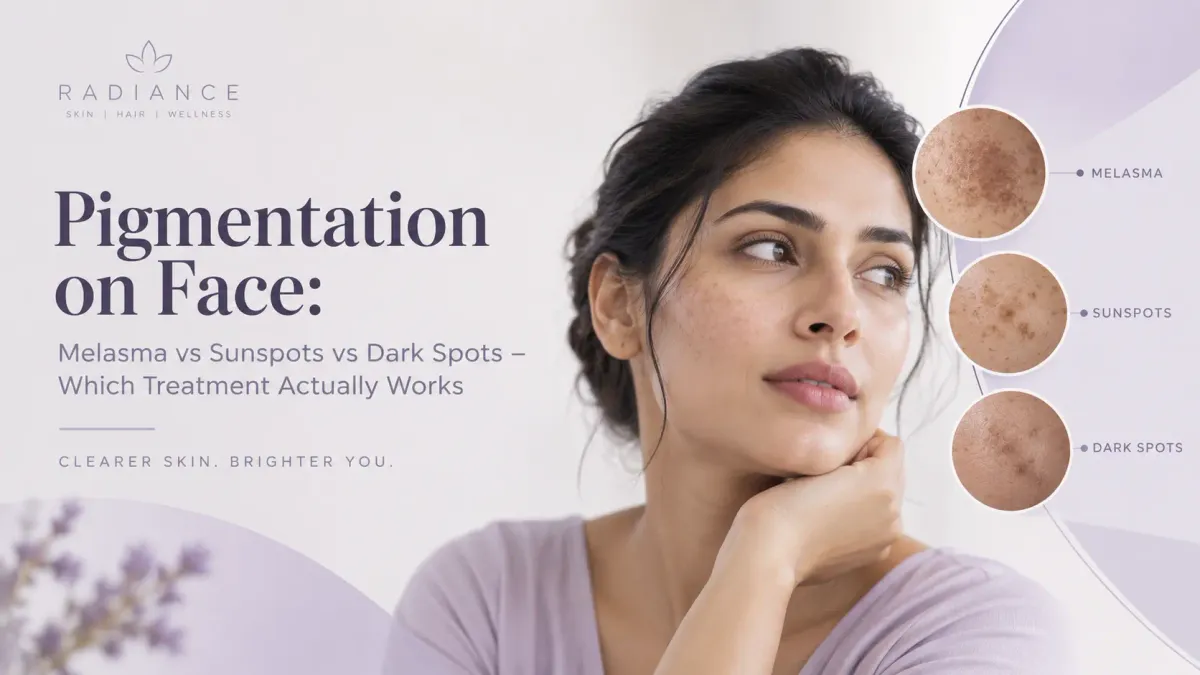
Pigmentation on Face: Melasma vs Sunspots vs Dark Spots - Which Treatment Actually Works
Pigmentation on the face requires targeted treatments rather than a one-size-fits-all approach. Chemical peels and laser pigmentation reduction work well for deep-rooted melasma and post-inflammatory marks, but proper diagnosis is the essential first step. Treating pigmentation early with a dermatologist ensures safe and lasting results for Indian skin tones. Pigmentation on the face requires targeted treatments rather than a one-size-fits-all approach. Chemical peels and laser pigmentation reduction work well for deep-rooted melasma and post-inflammatory marks, but proper diagnosis is the essential first step. Treating pigmentation early with a dermatologist ensures safe and lasting results for Indian skin tones.
Dr. Radhika Barde
M.B.B.S, DCH, DDV, FAD

Acne Scars: Boxcar, Rolling & Icepick and Which Treatment Works for Which Type
Different acne scars require highly specific clinical treatments to see real improvement. Icepick scars respond best to TCA Cross. Boxcar scars improve most with fractional lasers and Dermapen microneedling. Rolling scars require subcision to release tethered skin. Because most people have a complex combination of these scar types, a customized treatment plan from a dermatologist yields the safest and most effective results.

Dr. Nitin Barde
M.B.B.S, M.D, FRGUHS
Trusted by Thousands in Nagpur
Discover why people choose Radiance Clinic for premium treatments.

- ★★★★★
Dr. Nitin is exceptional! PRP sessions significantly helped my hair growth. Best place for hair and skin treatment in Nagpur!
- ★★★★★
Professional care tailored to my health. Dr. Nitin is knowledgeable and patient. Trustworthy clinic with very supportive staff!
- ★★★★★
Smooth, painless hair transplant with excellent post-op care. Feeling more confident already. Best dermatologist in Nagpur! 🤗🙏
- ★★★★★
Saw great improvement in my scalp and hair condition! Dr. Nitin is highly professional and knowledgeable. Highly recommended.
- ★★★★★
Best dermatology clinic in Nagpur! The team is highly experienced and they truly care about their patients' well-being.
- ★★★★★
Highly experienced dermatologist and skilled team. They truly care and provide great results for skin and hair. Great experience!
- ★★★★★
Radiance Clinic offers excellent skin treatment with professional and caring staff. I’ve seen great results and highly recommend it to anyone in Nagpur.
- ★★★★★
I came here for hair laser removal. Very nice service and treatment for fast. The clinic is hygienic and has positive environment. Amazing experience.
- ★★★★★
Friendly and supportive behavior. Perfect treatment and suggestions. Best doctor for skin and hair treatment in Nagpur!

Frequently Asked Questions
Get clarity on our advanced treatments from the leading skin doctor and hair clinic in Nagpur.