Pigmentation on Face: Melasma vs Sunspots vs Dark Spots - Which Treatment Actually Works
Pigmentation on the face requires targeted treatments rather than a one-size-fits-all approach. Chemical peels and laser pigmentation reduction work well for deep-rooted melasma and post-inflammatory marks, but proper diagnosis is the essential first step. Treating pigmentation early with a dermatologist ensures safe and lasting results for Indian skin tones. Pigmentation on the face requires targeted treatments rather than a one-size-fits-all approach. Chemical peels and laser pigmentation reduction work well for deep-rooted melasma and post-inflammatory marks, but proper diagnosis is the essential first step. Treating pigmentation early with a dermatologist ensures safe and lasting results for Indian skin tones.

Dr. Radhika Barde
M.B.B.S, DCH, DDV, FAD
Introduction
Figuring out the exact cause of dark patches on your skin can be confusing. Self-diagnosing pigmentation on Indian or tan-prone skin often leads to the wrong treatments. What looks like a simple dark spot might actually be hormonally driven melasma, and applying the wrong over-the-counter cream can sometimes make the darkening worse.
For those seeking pigmentation treatment in Nagpur, understanding the specific type of pigmentation you are dealing with is the most important step. Let's break down the differences and explore the clinical treatments that work.
What Is Facial Pigmentation, Really?
Facial pigmentation is the overproduction of melanin in specific areas of the skin, resulting in darker patches or spots.
Your skin gets its color from a pigment called melanin, produced by cells known as melanocytes. When these cells become damaged or overstimulated by sun exposure, hormonal fluctuations, or inflammation, they pump out excess melanin. Because the root causes of this overproduction vary, a single brightening serum will not fix everything. Deep dermal pigmentation requires a completely different approach compared to a superficial dark mark.
Elegance inYour Inbox
Join our curated circle and get 10% OFF on your first visit. Receive medical-grade insights, seasonal trends, and early access.
The 4 Main Types of Facial Pigmentation
Before seeking treatment, you need to identify your specific condition.
Melasma
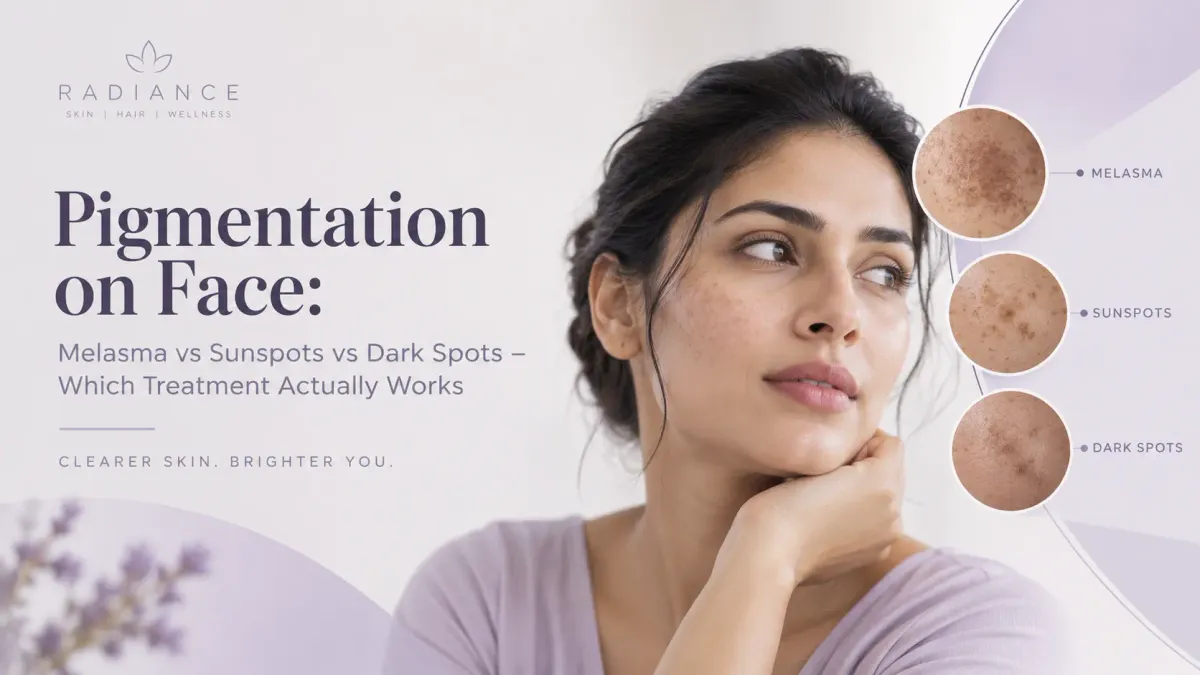
Melasma vs pigmentation is a common point of confusion. Melasma is a chronic form of hyperpigmentation triggered primarily by hormonal changes and exacerbated by sun exposure. It typically presents as symmetrical, brownish-gray patches on the cheeks, forehead, nose, and upper lip. Managing this condition requires a tailored melasma treatment protocol that addresses both the hormonal triggers and the skin surface simultaneously.
Post-Inflammatory Hyperpigmentation (PIH)
PIH leaves behind flat, discolored spots after an inflammatory wound heals, most commonly seen as post-acne dark spots. Because this type of pigmentation is a response to injury, it requires a different approach than hormonal melasma. These dark spots often accompany textural issues like post-acne scarring, which require a combined treatment approach for smooth skin.
Sunspots (Solar Lentigines)
Often referred to as age spots, sunspots are a direct result of chronic UV exposure. Unlike the large patches of melasma, sunspots have distinct edges and appear as flat, oval areas of increased pigmentation on sun-exposed areas like the face, hands, and shoulders.
Freckles
Freckles are small, flat, tan or light-brown spots that are largely genetic but become more pronounced with sun exposure. While harmless, those looking for freckles treatment can explore superficial light-based options, as they require a distinct clinical approach compared to deep dermal pigmentation.
Melasma vs Sunspots vs Dark Spots (Quick Comparison)
How to Remove Pigmentation From Face
Dermatologists rely on a tiered approach based on your skin's specific needs and the depth of the pigment.
Topical and Prescription Care
The first line of defense involves prescription-strength topicals containing hydroquinone, kojic acid, tranexamic acid, and retinoids. These ingredients inhibit melanin production and accelerate cell turnover.
Chemical Peels
Clinical-grade chemical peels use controlled exfoliating acids to remove the top layers of dead, pigmented skin cells. This encourages fresh, evenly pigmented skin to surface. Peels are highly customizable and excellent for treating PIH and superficial sunspots.
Laser Pigmentation Reduction
For deeper or more stubborn pigmentation, advanced laser technology is highly effective. A targeted pigmentation reduction laser safely shatters the excess melanin in the skin into microscopic particles, which your immune system then clears away. This is the gold standard for sunspots and carefully managed melasma.
HIFU and Dermapen
Treatments like Dermapen microneedling can be combined with depigmenting serums to push active ingredients deeper into the skin. This aids in the breakdown of stubborn pigment and improves overall skin tone.
What NOT to Do (Myth-Busting)
Aggressive home treatments often worsen the condition on melanin-rich skin.
- Avoid Harsh Home Remedies: Scrubbing your face with lemon juice or baking soda disrupts the skin barrier and causes inflammation.
- Skip Unsupervised Bleaching Creams: Over-the-counter steroid or bleaching creams can cause permanent skin thinning and a rebound effect where pigmentation returns darker.
- Do Not Skip Sunscreen: Exposing your skin to the sun immediately after a clinical treatment without adequate SPF protection will invite severe hyperpigmentation.
When to See a Dermatologist
Self-treatment often backfires on Indian skin tones because our melanocytes are highly reactive. If your pigmentation is spreading, becoming darker, or failing to respond to basic skincare after a few months, it is time to seek professional help. A board-certified dermatologist can accurately diagnose the depth and type of your pigmentation. Patients in our area can easily schedule a skin consultation at Radiance Clinic in Nagpur to get a clear, customized roadmap for their skin.
FAQs
Q: What is the fastest way to reduce pigmentation on the face?
A: The fastest method involves a combination of prescription topicals and in-clinic treatments like Q-switched lasers or medium-depth chemical peels. A dermatologist must tailor the approach to your specific pigmentation type to ensure rapid and safe fading.
Q: Is melasma permanent?
A: Melasma is a chronic condition, meaning it is long-lasting and prone to recurrence. However, with consistent clinical treatments, strict sun protection, and maintenance therapy, it can be faded significantly and controlled effectively.
Q: Best sunscreen for pigmentation-prone skin?
A: The best sunscreen for pigmentation in India is a broad-spectrum, tinted mineral sunscreen containing iron oxides, zinc oxide, or titanium dioxide with SPF 30 or higher. Tinted formulas provide extra protection against visible light.
Q: How much does pigmentation treatment cost in Nagpur?
A: The cost varies based on the treatment method. Mild chemical peels may start at lower price points, while advanced laser sessions are an investment. A proper consultation provides a transparent treatment plan and pricing.
Q: Can pigmentation come back after treatment?
A: Yes, pigmentation can return, especially if the root trigger is re-introduced. Strict daily use of broad-spectrum sunscreen and ongoing maintenance skincare are essential to protect your results.
Not Sure Which Type of Pigmentation You Have?
Guessing wastes time and can make pigmentation worse. Get an accurate diagnosis and a treatment plan built for your skin from Dr. Radhika Barde.