

Mole Removal in Nagpur
Home / Services / Skin / Mole RemovalMole removal in Nagpur provides safe, doctor-led dermatological procedures to eliminate raised, flat, or cosmetically concerning melanocytic nevi across the face and body. When performed in a medical clinic, mole removal combines tissue-sparing technology with clinical malignancy screening, helping patients achieve clear skin contours and aims to minimize scarring.
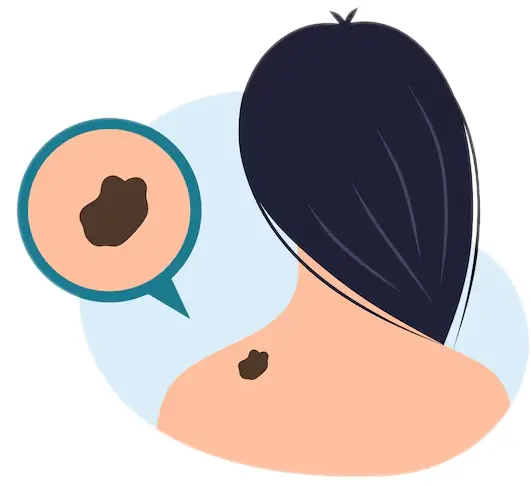
Treatment Quick Facts
- First Step
Dermoscopy helps identify features suspicious for melanoma. Only histopathology confirms the diagnosis.
- Treatment Options
Radiofrequency shave excision, CO2 laser ablation (provides no tissue for pathology), and surgical excision with histopathology.
- Procedure Time
15 to 30 minutes in an outpatient clinical setting.
- Anesthesia
Localized numbing cream or minor local anesthetic injection for comfortable treatment.
- Downtime
Normal activities resume immediately; superficial scabs shed within 7 to 10 days.
- Price
Starts from ₹5,000 depending on mole size, depth, location, and selected modality.
What Is a Mole?
A mole, clinically designated as a melanocytic nevus, develops when pigment-producing cells known as melanocytes grow in localized clusters rather than spreading evenly across the epidermis and dermis. While most nevi are completely benign, accurate clinical evaluation by a dermatologist is critical before any cosmetic intervention. Dermatologists employ high-magnification dermoscopy and the international ABCDE criteria to differentiate harmless beauty spots from atypical lesions that require surgical biopsy.
The International ABCDE Malignancy Criteria
Asymmetry
One half of the mole does not mirror the other half in outline or elevation.
Border Irregularity
Edges are ragged, notched, scalloped, blurred, or poorly defined.
Color Variation
Non-uniform shades with mixed pigmentation including black, brown, tan, blue, or red.
Diameter
Lesion width greater than 6 millimeters (roughly the size of a pencil eraser).
Evolution
Any progressive change in size, elevation, pigment tone, bleeding, or itching.
Distinguishing Moles from Common Benign Cutaneous Mimics
Seborrheic Keratosis
Extremely common benign epidermal growths that often mimic pigmented moles with a stuck-on, warty appearance, requiring dermoscopic distinction before treatment.
Dermatofibromas & Solar Lentigines
Firm dermal nodules showing a characteristic pinch sign (dermatofibromas) or flat UV-induced macules (lentigines) that present differently from true nevocellular nests.
Viral Warts
Contagious viral lesions caused by human papillomavirus require medical wart removal treatment rather than nevus removal.
Skin Tags
Pedunculated fibroepithelial polyps formed in friction-prone skin folds are managed under skin tags removal.
Birthmarks
Congenital vascular malformations or widespread pigmented patches are addressed through specialized birthmark removal protocols.
Clinical Mole Removal Overview
Clinical mole removal focuses on complete lesion clearance while preserving healthy surrounding skin architecture. Rather than relying on aggressive cauterization or unverified chemical solutions, modern dermatology utilizes controlled, shallow tissue removal to gently remove the nevus flush with the skin plane.
Treatment options include radiofrequency (RF) shave excision for raised dermal nevi, CO2 laser ablation for benign superficial spots (which provides no tissue for pathology), and cold-scalpel surgical excision for deep or medically atypical moles. When an atypical or dysplastic nevus is identified, the lesion is never treated with ablative lasers; instead, suspicious lesions are removed by complete excisional biopsy; any further surgery depends on the pathology report. This dual focus on diagnostic safety and cosmetic precision ensures that patients achieve discreet aesthetic outcomes without compromising oncological vigilance.
Key Benefits of Clinical Mole Removal
Undergoing professional mole removal in a clinical setting provides vital advantages over unregulated aesthetic salons or dangerous home remedies:
Diagnostic Safety
Dermoscopy helps identify features suspicious for melanoma. Only histopathology confirms the diagnosis, ensuring dangerous lesions are never mistakenly treated with cosmetic ablation.
Minimal Scarring
Controlled, shallow tissue removal minimizes collateral heat injury to surrounding tissue, allowing wounds to heal flush with normal skin contours.
Comfortable Experience
Targeted local anesthesia or high-potency topical numbing ensures patients experience minimal discomfort during lesion removal.
Histopathological Verification
Questionable lesions are preserved through shave or surgical excision for formal biopsy rather than vaporized without pathology.
Rapid Re-epithelialization
Controlled superficial wound healing supports smooth, even skin texture restoration with superficial scabs shedding within 7 to 10 days.
| Clinical Focus | What It Aims to Deliver |
|---|---|
| Diagnostic Safety | Dermoscopy helps identify features suspicious for melanoma. Only histopathology confirms the diagnosis |
| Minimal Scarring | Controlled, shallow tissue removal minimizes collateral heat injury to surrounding skin |
| Comfortable Experience | Targeted local anesthesia ensures patients experience minimal discomfort during removal |
| Histopathological Verification | Questionable lesions are preserved through shave or surgical excision for formal biopsy rather than vaporized without pathology |
| Rapid Re-epithelialization | Controlled superficial wound healing supports smooth, even skin texture restoration |
How Do Mole Removal Methods Compare?
Treatment options include specialized ablative, electrosurgical, and surgical techniques matched to nevus depth, anatomical location, and clinical suspicion:
| Feature | CO2 Laser Ablation | Radiofrequency (RF) Shave Excision | Surgical Elliptical Excision |
|---|---|---|---|
| Mechanism | Focused CO2 ablative laser light vaporizes targeted pigment layers | Ultra-high frequency radio waves shave the lesion with controlled coagulation | Cold scalpel excision through full skin thickness with micro-sutures |
| Best Suited For | Benign, flat, or superficial facial moles confirmed safe under dermoscopy | Elevated, raised dermal moles and intradermal facial nevi | Deeply rooted nevi, recurring moles, or atypical lesions requiring biopsy |
| Anesthesia | Topical numbing cream or local infiltration | Local anesthetic injection | Local anesthetic injection |
| Pathology Suitability | Tissue is vaporized; laser ablation provides no tissue for pathology | Intact shave specimen can be sent for pathology, though RF thermal artifact can limit reading | Full-thickness specimen with peripheral and deep margins for histopathology |
| Recovery Period | 5 to 7 days for superficial crust to slough | 7 to 10 days for protective scab to detach | 7 to 14 days; suture removal typically at 7 days |
| Scar Profile | Flat pink mark; scar maturation and fading take 6 to 12 months | Minimal flat mark; softens and blends over 6 to 12 months | Fine linear surgical mark; scar maturation continues over 6 to 12 months |
CO2 Laser Ablation
Superficial VaporizationFocused CO2 ablative laser light vaporizes targeted pigment layers
Benign, flat, or superficial facial moles confirmed safe under dermoscopy
Topical numbing cream or local infiltration
Tissue is vaporized; laser ablation provides no tissue for pathology
5 to 7 days for superficial crust to slough
Flat pink mark; scar maturation and fading take 6 to 12 months
How Is Mole Removal Assessed and Managed?
At Radiance Clinic, dermatological mole removal follows a structured outpatient clinical pathway designed for oncological safety and optimal cosmetic recovery:
Dermoscopic Screening & Mapping
The doctor conducts a high-magnification dermoscopic exam to identify features suspicious for melanoma. Only histopathology confirms the diagnosis.
Technique Selection
Based on lesion depth, location, and pathology requirements, the doctor selects between CO2 laser ablation, radiofrequency shave excision, or surgical excision.
Anesthesia and Removal
A local anesthetic is administered to ensure complete comfort. The doctor removes the lesion using controlled, shallow tissue removal, controlling bleeding with micro-bipolar coagulation.
Wound Dressing & Histopathology
A protective sterile dressing is applied with plain petrolatum (or antibiotic ointment only if prescribed). Any removed mole that is not clearly benign is sent for histopathology, with reports available within about a week.
Follow-Up & Healing Review
Post-procedure reviews evaluate re-epithelialization, wound maturation, and biopsy findings to confirm complete lesion clearance and clear margins.
Is Mole Removal Safe? Candidacy and Biopsy Protocols
Mole removal is a safe, routine outpatient procedure when performed by an experienced dermatologist. Crucially, ablative lasers and destructive chemicals are contraindicated for any mole demonstrating irregular pigment borders, rapid growth, or asymmetry. Suspicious lesions are removed by complete excisional biopsy; any further surgery depends on the pathology report.
Pregnancy Considerations
Melanoma Risk Profiling
Cardiac Pacemaker Precautions
Systemic Medical Screening
Healing & Phototype Care
When to Seek Urgent Medical Evaluation
If an existing mole shows rapid asymmetrical growth, jagged or notched borders, multi-colored darkening (black, blue, red, or grey variegation), spontaneous bleeding, oozing, persistent itching, or presents as an unusual "ugly duckling" lesion, do not pursue cosmetic procedures. See a dermatologist promptly (within days); formal diagnostic excision or biopsy follows if needed.
Aftercare, Healing, and Scar Prevention
Diligent post-procedure aftercare is essential to optimize cosmetic outcomes and prevent scarring:
Moist Wound Healing Environment
Keep the treated site clean and apply plain petrolatum twice daily for the first week to maintain an optimal cellular regeneration environment; apply antibiotic ointment only if prescribed, avoiding routine topical antibiotics that carry allergy risks like neomycin contact dermatitis.
Zero Picking or Scratching
Allow the protective crust to separate naturally within 7 to 10 days. Prematurely scratching or peeling scabs can tear immature collagen fibers and cause permanent indented marks or dyschromia.
Rigorous Daily Photoprotection
Shield fresh pink skin from direct sunlight. Once the scab sheds, apply broad-spectrum SPF 30+ (physical or tinted sunscreen helps Fitzpatrick IV to V) for at least 3 to 6 months, plus a hat, to prevent post-inflammatory hyperpigmentation.
Topical Silicone Therapy
For deeper surgical sites, topical medical-grade silicone gels or silicone sheets can be recommended after complete skin closure to support flat, smooth, and inconspicuous scar maturation.
What Influences the Mole Removal Cost in Nagpur?
Because mole removal is tailored to individual lesion characteristics, treatment cost in Nagpur depends on several clinical variables:
Number of Moles Treated
Single mole removal involves an individual procedure fee, while patients treating multiple facial or body moles may be quoted together with bundled clinic pricing.
Lesion Depth and Dimensions
Small, superficial flat nevi require minimal operative time, whereas large or deeply rooted dermal moles require complex excision or multi-step tissue sculpting.
Selected Modality & Technology
Equipment, consumables, and clinical setup differ between CO2 laser ablation, high-precision radiofrequency shave excision, and minor surgical cold-scalpel excision.
Laboratory Histopathology Verification
If a mole demonstrates borderline or atypical characteristics requiring formal biopsy verification, independent laboratory pathology fees are factored into the total procedure cost.
During your consultation, the doctor performs a complete dermoscopic examination and provides a transparent, itemized quote starting from approximately ₹5,000 based on your specific clinical needs.
Who Administers Treatments at Radiance Clinic?
At Radiance Clinic, an experienced dermatologist manages each treatment, helping ensure that the procedure is tailored to individual skin characteristics and lesion profiles.

Dr. Nitin Barde
Dr. Nitin Barde is the Founder of Radiance Clinic and a dermatologist with over a decade of clinical experience. He completed his MD in Dermatology in Pune, followed by a Fellowship in Dermatosurgery (FRGUHS) in Bangalore. In 2014, he was awarded the International Society of Dermatologic Surgery (ISDS) Statesmen Award in Jerusalem.
Skin & Aesthetic Dermatology Expertise
- M.D. Dermatology, Pune
- Fellowship in Dermatosurgery (FRGUHS), Bangalore
- Over a decade of clinical experience in dermatology and aesthetic procedures

Dr. Radhika Barde
Dr. Radhika Barde is a Dermatologist at Radiance Clinic. She holds an MBBS, a DCH (Diploma in Child Health), and a DDV (Diploma in Dermatology, Venereology and Leprosy), and has completed a Fellowship in Aesthetic Dermatology (FAD). Her clinical practice includes aesthetic and cosmetic dermatology, alongside her focus on female pattern hair loss and diffuse thinning.
Skin & Aesthetic Dermatology Expertise
- M.B.B.S, DCH, DDV
- Fellowship in Aesthetic Dermatology (FAD)
- Clinical background in aesthetic dermatology and skin health
About Radiance Clinic
Radiance Clinic is a leading centre for dermatology and aesthetic treatments in Nagpur. Known for a patient-first approach and a 4.9-star review rating from over 1,800 verified patient reviews, the clinic provides advanced, evidence-based care in a safe and comfortable environment.
The clinic is conveniently located at 2nd Floor, Panchavati Tower, Wardha Rd, beside Hitvada Press & Shatau Hospital, near Dhantoli. Serving patients across Dhantoli, Ramdaspeth, and central Nagpur, the facility ensures privacy and clinical excellence in every visit.


Explore Expert Skin & Lesion Care Guides
Read evidence-based clinical articles on mole screening, dermoscopy, laser ablation, and scar recovery written and reviewed by our dermatologists.

Dry Skin in Winter: A Dermatologist Guide to Winter Skin Care Routine in Nagpur
Winter brings pleasant weather to Nagpur and Central India, but it also brings dry northerly winds and sharp drops in atmospheric humidity. When indoor and outdoor humidity levels drop below 40%, the moisture gradient pulls water out of the stratum corneum through accelerated transepidermal water loss (TEWL). Without proactive routine adjustments, simple dryness quickly progresses into cracked skin, chapped lips, painful heels, or persistent winter itching. This guide explains the physiological mechanisms behind winter skin dehydration, outlines an evidence-based morning and evening winter skin care routine, provides comparison guidance between dry skin and eczema, and presents clinical solutions available at Radiance Clinic in Nagpur.

Dr. Radhika Barde
M.B.B.S, DCH, DDV, FAD
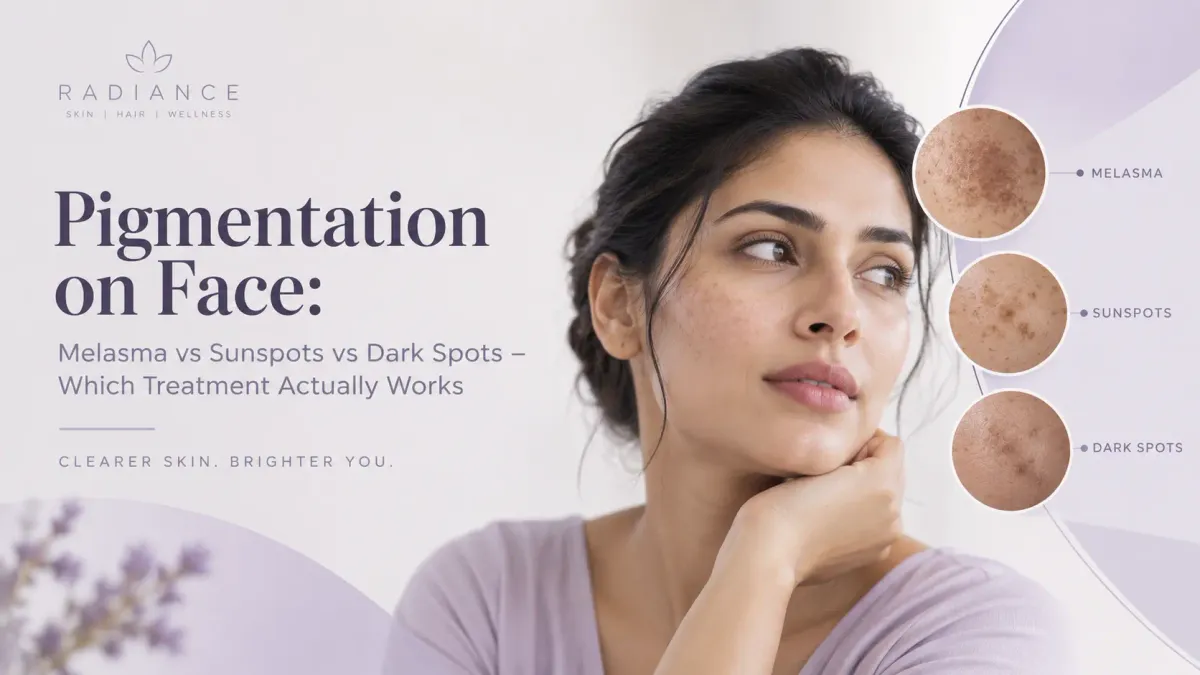
Pigmentation on Face: Melasma vs Sunspots vs Dark Spots - Which Treatment Actually Works
Pigmentation on the face requires targeted treatments rather than a one-size-fits-all approach. Chemical peels and laser pigmentation reduction work well for deep-rooted melasma and post-inflammatory marks, but proper diagnosis is the essential first step. Treating pigmentation early with a dermatologist ensures safe and lasting results for Indian skin tones. Pigmentation on the face requires targeted treatments rather than a one-size-fits-all approach. Chemical peels and laser pigmentation reduction work well for deep-rooted melasma and post-inflammatory marks, but proper diagnosis is the essential first step. Treating pigmentation early with a dermatologist ensures safe and lasting results for Indian skin tones.
Dr. Radhika Barde
M.B.B.S, DCH, DDV, FAD

Acne Scars: Boxcar, Rolling & Icepick and Which Treatment Works for Which Type
Different acne scars require highly specific clinical treatments to see real improvement. Icepick scars respond best to TCA Cross. Boxcar scars improve most with fractional lasers and Dermapen microneedling. Rolling scars require subcision to release tethered skin. Because most people have a complex combination of these scar types, a customized treatment plan from a dermatologist yields the safest and most effective results.
Dr. Nitin Barde
M.B.B.S, M.D, FRGUHS
Trusted by Thousands in Nagpur
Discover why people choose Radiance Clinic for premium treatments.

- ★★★★★
Dr. Nitin is exceptional! PRP sessions significantly helped my hair growth. Best place for hair and skin treatment in Nagpur!
- ★★★★★
Professional care tailored to my health. Dr. Nitin is knowledgeable and patient. Trustworthy clinic with very supportive staff!
- ★★★★★
Smooth, painless hair transplant with excellent post-op care. Feeling more confident already. Best dermatologist in Nagpur! 🤗🙏
- ★★★★★
Saw great improvement in my scalp and hair condition! Dr. Nitin is highly professional and knowledgeable. Highly recommended.
- ★★★★★
Best dermatology clinic in Nagpur! The team is highly experienced and they truly care about their patients' well-being.
- ★★★★★
Highly experienced dermatologist and skilled team. They truly care and provide great results for skin and hair. Great experience!
- ★★★★★
Radiance Clinic offers excellent skin treatment with professional and caring staff. I’ve seen great results and highly recommend it to anyone in Nagpur.
- ★★★★★
I came here for hair laser removal. Very nice service and treatment for fast. The clinic is hygienic and has positive environment. Amazing experience.
- ★★★★★
Friendly and supportive behavior. Perfect treatment and suggestions. Best doctor for skin and hair treatment in Nagpur!

Frequently Asked Questions
Get clarity on our advanced treatments from the leading skin doctor and hair clinic in Nagpur.