

Psoriasis Treatment in Nagpur
Home / Services / Skin / Psoriasis TreatmentPsoriasis treatment in Nagpur provides medical management for chronic inflammatory plaques across the body. Following dermatological assessment, a physician designs an individualized care protocol targeting immune-mediated inflammation, helping control symptoms and support longer symptom-free periods.
Quick Facts: Clinical Psoriasis Protocol
- Initial AssessmentFirst Step
Clinical evaluation and plaque severity assessment by a doctor.
- Clinical IndicationsBest For
Plaque, scalp, palmoplantar, and inverse psoriasis.
- Therapeutic ScopeTreatment Options Include
Prescription topicals, supervised light therapy, oral medications, and biologic or rheumatology referral.
- Expected TimelineResponse
Improvement usually builds progressively over weeks to months.
- Care GuidancePrice Roadmap
Consultation-based depending on disease extent and clinical approach.
What Is Psoriasis?
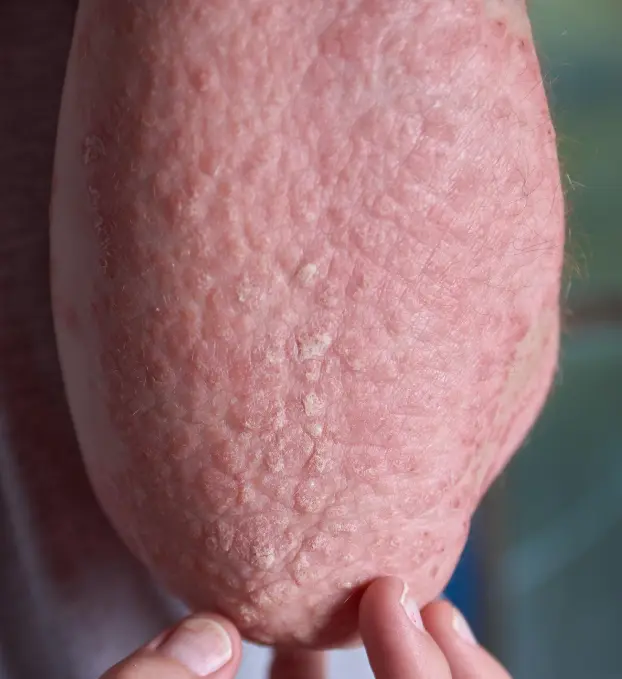
Psoriasis is a chronic, immune-mediated inflammatory skin condition characterized by accelerated epidermal cell turnover, producing thick erythematous plaques capped with silvery scales. While eczema treatment addresses poorly demarcated, highly pruritic patches on flexural folds, plaque psoriasis presents as sharply defined lesions, commonly appearing on the elbows, knees and scalp.
Beyond classic plaques, clinical variants include palmoplantar psoriasis affecting the palms and soles, inverse genital psoriasis in delicate skin creases, drop-like guttate lesions following bacterial infections, and localized or generalized pustular eruptions. Nail psoriasis, presenting as pitting or crumbling, frequently serves as an early clinical warning sign of psoriatic arthritis. Because persistent systemic inflammation correlates with heightened risks of cardiometabolic disease and depression, qualified dermatologists evaluate overall physical and emotional health alongside cutaneous signs.
Recognizing Clinical Variants of Psoriasis
Accurate phenotype identification determines whether localized topicals, targeted phototherapy, or systemic immunomodulators are required:
Plaque Psoriasis
Sharply defined, raised erythematous plaques capped with adherent silvery-white scales, typically distributed across extensor surfaces like the elbows, knees, and lower back.
Scalp Psoriasis
Thick, scaly plaques along the hairline, crown, and retroauricular folds, requiring clinical differentiation from severe seborrheic dermatitis.
Palmoplantar Psoriasis
Affects the palms of the hands and soles of the feet with painful fissures, thickened plaques, and hyperkeratosis, often aggravated by smoking.
Inverse & Genital Psoriasis
Smooth, shiny, non-scaly erythematous patches in intertriginous skin folds (groin, axillae, under breasts) prone to maceration and irritation.
Guttate Psoriasis
Small, teardrop-shaped erythematous scaly papules that erupt abruptly over the trunk and extremities, frequently triggered by prior streptococcal throat infections.
Nail Psoriasis & Arthritis Warning
Presents as pinpoint nail pitting, subungual hyperkeratosis, and crumbling, frequently serving as an early clinical harbinger of psoriatic arthritis.
Clinical Psoriasis Treatment Overview
Medical psoriasis management focuses on slowing accelerated epidermal turnover, clearing scaly plaques, and sustaining long-term remission through a stepwise dermatological ladder. Because psoriasis is a lifelong immune-mediated condition without a permanent cure, clinical care is tailored to disease severity, anatomical location, and individual patient health. Treatment options include targeted prescription topicals for mild localized disease, supervised medical light therapy, and conventional or targeted oral disease-modifying agents.
When systemic therapy is required, options include oral disease-modifying agents and targeted biologics prescribed after consultation. For patients presenting with coexisting joint pain, dactylitis, or suspected psoriatic arthritis, systemic options are evaluated, and rheumatology referral is usual for comprehensive joint care. Dermatologist-guided care prevents sudden rebound flares and supports extended symptom-free periods.
Key Benefits of Clinical Psoriasis Treatment
Clinical dermatological supervision provides structured management over unverified home remedies:
| Clinical Focus | What It Aims to Deliver |
|---|---|
| Inflammation Control | Aims to slow epidermal proliferation and calm active erythematous plaques |
| Itch & Flake Relief | Softens thick scales to alleviate persistent psoriasis itching and burning |
| Remission Maintenance | Establishes maintenance protocols to prolong disease-free intervals |
| Differential Diagnosis | Differentiates scalp psoriasis from seborrheic dermatitis treatment concerns |
Inflammation Control
Aims to slow epidermal proliferation and calm active erythematous plaques across the skin.
Itch & Flake Relief
Softens thick scales to alleviate persistent psoriasis itching, tightness, and burning sensations.
Remission Maintenance
Establishes structured maintenance protocols to prolong symptom-free intervals and prevent rebound flares.
Differential Diagnosis
Accurately differentiates scalp psoriasis from seborrheic dermatitis treatment concerns and other scaly dermatoses.
How Do Clinical Treatment Approaches Compare?
Treatment options include topical, phototherapeutic, and systemic modalities matched to affected body surface area and plaque severity, with specialized referral coordinated when indicated:
| Feature | Prescription TopicalsFirst-Line Localized Therapy | Medical Light TherapyTargeted Phototherapy (NBUVB) | Systemic Therapy & Specialist ReferralOral DMARDs, Biologics & Coordinated Care |
|---|---|---|---|
| Mechanism | Corticosteroids and vitamin D analogs | Controlled narrowband UVB exposure | Oral disease-modifying agents or targeted biologics prescribed after consultation |
| Best Suited For | First-line for mild disease; add-on in moderate to severe | Moderate widespread plaque distribution | Severe, recalcitrant disease or psoriatic arthritis (rheumatology referral is usual) |
| Action | Reduces localized cell proliferation | Slows rapid immune cell activity in skin | Regulates systemic inflammatory pathways |
| Administration | Daily patient-applied home care | Supervised light therapy protocols (2 to 3 times weekly) | Prescribed oral tablets; where needed, referral for biologics or rheumatology |
| Safety Monitoring | Periodic skin barrier checks | Measured ultraviolet dosing | Routine blood tests; pre-treatment infection screening |
| Typical Response | Weeks to months | Weeks to months | Weeks to months |
Prescription Topicals
Corticosteroids and vitamin D analogs
First-line for mild disease; add-on in moderate to severe
Reduces localized cell proliferation
Daily patient-applied home care
Periodic skin barrier checks
How Is Psoriasis Assessed and Managed?
Clinical psoriasis care follows a structured outpatient dermatological pathway:
Clinical Scoring
The doctor measures disease severity using Body Surface Area (BSA), the Psoriasis Area and Severity Index (PASI), and Dermatology Life Quality Index (DLQI) scores to establish an objective baseline.
Systemic Stratification
Medical history is evaluated for psoriatic arthritis, cardiometabolic risk factors, depression, lifestyle triggers, and past treatment tolerance to design a safe, tailored care roadmap.
Treatment Plan Formulation
Treatment options include keratolytics, topical anti-inflammatory formulations, and medical light therapy protocols. When oral disease-modifying agents are indicated, the appropriate medicines are prescribed after consultation; where needed, referral for biologics or rheumatology is arranged for multi-disciplinary care.
Long-Term Monitoring
Routine follow-ups assess objective plaque clearance, monitor laboratory parameters, adjust therapeutic dosing, and manage lifestyle triggers to maintain extended symptom-free periods.
Is Psoriasis Treatment Safe? Consultation and Candidacy
During consultation, the doctor performs rigorous pre-treatment screening. Baseline evaluations review liver health, kidney function, lipid profiles, alcohol use, and pregnancy status. Prior to initiating systemic therapies or biologics, screening for latent tuberculosis (TB) and hepatitis B and C is essential to prevent infection reactivation. Systemic medicines may carry strict pregnancy contraindications, and conception planning is required for patients of reproductive age on certain oral disease-modifying agents. Overuse of strong topical steroids risks localized skin thinning, while systemic oral steroids and steroid-laced unverified herbal remedies must be strictly avoided due to severe risks of triggering life-threatening rebound pustular flares upon withdrawal. Phototherapy requires evaluation of skin cancer history, photosensitizing medications, and cumulative UV exposure.
Organ Function & Infection Checks
Prior to initiating systemic therapies or biologics, baseline assessments review liver enzymes, renal function, lipid profiles, and mandatory screening for latent tuberculosis (TB) and hepatitis B and C to prevent reactivation.
Pregnancy & Conception Planning
Systemic medicines carry strict pregnancy contraindications in some cases, with prolonged post-treatment avoidance. Conception planning and contraception guidance are strictly enforced for patients of reproductive age on certain oral disease-modifying agents.
Avoidance of Oral Steroid Withdrawal Rebounds
Systemic oral steroids and unverified steroid-laced herbal powders must be avoided. Abrupt cessation of systemic corticosteroids risks precipitating life-threatening rebound erythrodermic or generalized pustular flares.
Controlled Ultraviolet Dosing
Supervised narrowband UVB light therapy protocols require detailed evaluation of skin cancer history, concurrent photosensitizing medications, and lifetime cumulative UV exposure to maintain dermatological safety.
When to Seek Urgent Medical Care
Erythrodermic Psoriasis
Widespread, fiery red skin shedding across almost the entire body, severely compromising the skin barrier, fluid balance, and temperature regulation.
Generalized Pustular Eruption
Sudden appearance of extensive sterile white or yellowish pustules accompanied by systemic high-grade fever, chills, and severe malaise.
Severe Acute Joint Swelling
Rapid onset of painful swelling in multiple joints, tender sausage-like digits (dactylitis), or severe immobility requiring urgent rheumatologic evaluation.
Emergency Directive: The clinical scenarios above indicate acute systemic decompensation. Please report immediately to the nearest hospital emergency room or tertiary emergency facility rather than waiting for an outpatient consultation appointment.
Aftercare, Flare Prevention, and Lifestyle Support
Effective psoriasis management extends beyond clinic visits to consistent home aftercare and trigger avoidance. If genital psoriasis or palmoplantar psoriasis causes painful cracking, specialized barrier ointments support day-to-day comfort and skin barrier resilience.
Thick Emollient Hydration Post-Bathing
Apply rich, fragrance-free barrier creams or ointments immediately after lukewarm bathing to lock in moisture, soften stubborn scales, and calm persistent burning and itching.
Preventing the Koebner Phenomenon
Strictly avoid scratching, rubbing, or peeling scales. Any physical skin trauma, abrasion, or tight friction can provoke new psoriatic plaques along the injured zone (isomorphic response).
Trigger Identification & Modulation
Identify and reduce personal lifestyle triggers such as chronic stress, alcohol intake, smoking, excess weight, dry winter weather, and untreated streptococcal infections that aggravate flares.
Medication Adherence (No Abrupt Cessation)
Never stop prescribed systemic medications or potent topical therapies without physician supervision. Unplanned discontinuation can precipitate severe rebound flares or pustular conversions.
What Influences the Psoriasis Treatment Cost in Nagpur?
Because psoriasis is a chronic medical condition rather than a single cosmetic procedure, psoriasis treatment cost in Nagpur depends on individualized clinical requirements. Treatment options include topical ointments, scheduled light therapy protocols, and oral medications. Overall expenses vary depending on required therapeutic modalities, routine safety laboratory tests, follow-up frequency, and, where needed, referral for biologics or rheumatology. Limited plaques incur different ongoing costs compared to extensive disease requiring systemic therapy. During consultation, the doctor performs an examination and outlines an estimated care roadmap to help ensure clear financial expectations.
Body Surface Area & Plaque Distribution
Limited plaques localized to elbows or knees involve different ongoing medication and topical requirements compared to extensive body-wide disease or difficult-to-treat scalp and palmoplantar involvement.
Prescription & Phototherapy Modalities
Expenses depend on whether clinical management requires prescription topical keratolytics and corticosteroids, scheduled in-clinic phototherapy sessions, conventional oral disease-modifying agents, or targeted biologics.
Laboratory & Organ Monitoring
Patients on systemic medications require routine baseline and follow-up blood work (liver, kidney, lipid, complete blood counts) to ensure ongoing biological safety.
Specialist & Rheumatology Coordination
When coexisting psoriatic arthritis or complex comorbidities are present, multidisciplinary coordination and biologic therapy pathways are factored into the comprehensive care plan.
Who Administers Treatments at Radiance Clinic?
At Radiance Clinic, an experienced dermatologist manages each treatment, helping ensure that the procedure is tailored to individual skin characteristics and lesion profiles.

Dr. Nitin Barde
Dr. Nitin Barde is the Founder of Radiance Clinic and a dermatologist with over a decade of clinical experience. He completed his MD in Dermatology in Pune, followed by a Fellowship in Dermatosurgery (FRGUHS) in Bangalore. In 2014, he was awarded the International Society of Dermatologic Surgery (ISDS) Statesmen Award in Jerusalem.
Skin & Aesthetic Dermatology Expertise
- M.D. Dermatology, Pune: Comprehensive academic and clinical training in chronic inflammatory dermatoses, venereology, and cutaneous biology.
- Fellowship in Dermatosurgery (FRGUHS), Bangalore: Advanced surgical and procedural sub-specialization for complex skin revisions.
- Over a Decade of Clinical Practice: Dedicated to evidence-based medical dermatology, phototherapy, and systemic immunosuppressive management tailored to Indian skin.

Dr. Radhika Barde
Dr. Radhika Barde is a Dermatologist at Radiance Clinic. She holds an MBBS, a DCH (Diploma in Child Health), and a DDV (Diploma in Dermatology, Venereology and Leprosy), and has completed a Fellowship in Aesthetic Dermatology (FAD). Her clinical practice includes aesthetic and cosmetic dermatology, alongside her focus on female pattern hair loss and diffuse thinning.
Skin & Aesthetic Dermatology Expertise
- M.B.B.S, DCH, DDV: Comprehensive medical grounding in clinical dermatology, paediatric skin conditions, and chronic inflammatory care.
- Fellowship in Aesthetic Dermatology (FAD): Specialized expertise in non-invasive cosmetic therapies, laser protocols, and medi-facials.
- Clinical Focus: Aesthetic dermatology, skin health restoration, and dedicated procedural management.
About Radiance Clinic
Radiance Clinic is a leading centre for dermatology and aesthetic treatments in Nagpur. Known for a patient-first approach and a 4.9-star review rating from over 1,800 verified patient reviews, the clinic provides advanced, evidence-based care in a safe and comfortable environment.
The clinic is conveniently located at 2nd Floor, Panchavati Tower, Wardha Rd, beside Hitvada Press & Shatau Hospital, near Dhantoli. Serving patients across Dhantoli, Ramdaspeth, and central Nagpur, the facility ensures medical privacy and clinical excellence in every visit.
Explore Expert Skin Care Insights
Explore clinical dermatology guides and psoriasis management advice written and reviewed by our dermatologists.

Dry Skin in Winter: A Dermatologist Guide to Winter Skin Care Routine in Nagpur
Winter brings pleasant weather to Nagpur and Central India, but it also brings dry northerly winds and sharp drops in atmospheric humidity. When indoor and outdoor humidity levels drop below 40%, the moisture gradient pulls water out of the stratum corneum through accelerated transepidermal water loss (TEWL). Without proactive routine adjustments, simple dryness quickly progresses into cracked skin, chapped lips, painful heels, or persistent winter itching. This guide explains the physiological mechanisms behind winter skin dehydration, outlines an evidence-based morning and evening winter skin care routine, provides comparison guidance between dry skin and eczema, and presents clinical solutions available at Radiance Clinic in Nagpur.

Dr. Radhika Barde
M.B.B.S, DCH, DDV, FAD
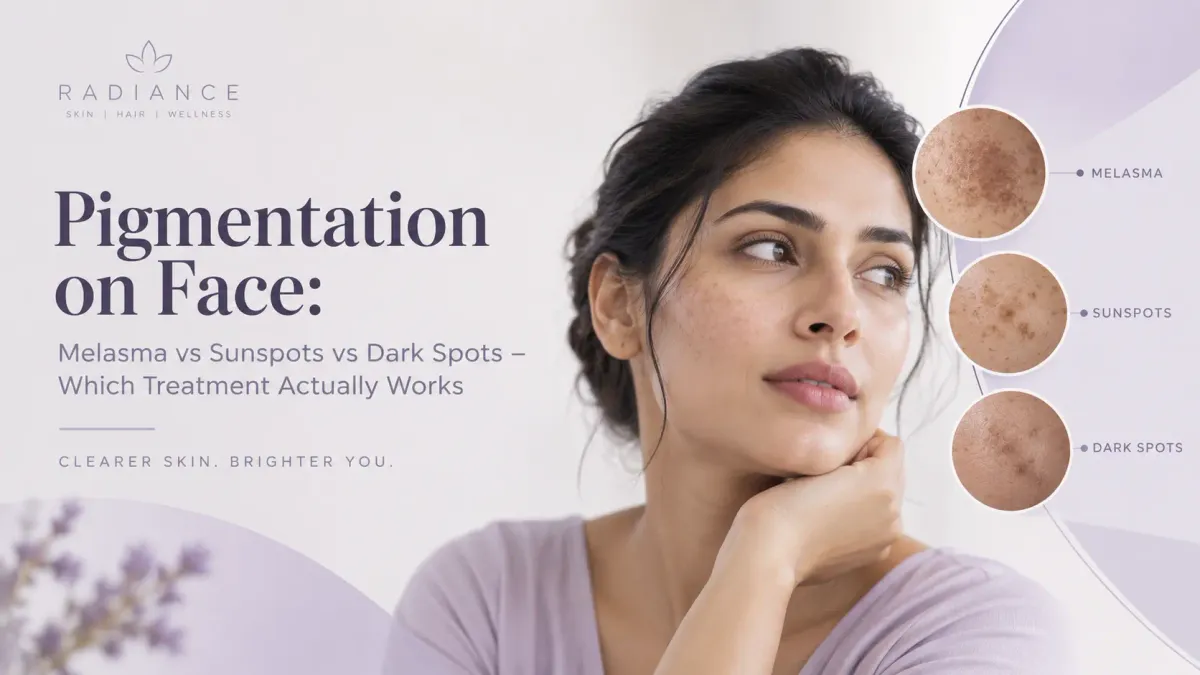
Pigmentation on Face: Melasma vs Sunspots vs Dark Spots - Which Treatment Actually Works
Pigmentation on the face requires targeted treatments rather than a one-size-fits-all approach. Chemical peels and laser pigmentation reduction work well for deep-rooted melasma and post-inflammatory marks, but proper diagnosis is the essential first step. Treating pigmentation early with a dermatologist ensures safe and lasting results for Indian skin tones. Pigmentation on the face requires targeted treatments rather than a one-size-fits-all approach. Chemical peels and laser pigmentation reduction work well for deep-rooted melasma and post-inflammatory marks, but proper diagnosis is the essential first step. Treating pigmentation early with a dermatologist ensures safe and lasting results for Indian skin tones.
Dr. Radhika Barde
M.B.B.S, DCH, DDV, FAD

Acne Scars: Boxcar, Rolling & Icepick and Which Treatment Works for Which Type
Different acne scars require highly specific clinical treatments to see real improvement. Icepick scars respond best to TCA Cross. Boxcar scars improve most with fractional lasers and Dermapen microneedling. Rolling scars require subcision to release tethered skin. Because most people have a complex combination of these scar types, a customized treatment plan from a dermatologist yields the safest and most effective results.

Dr. Nitin Barde
M.B.B.S, M.D, FRGUHS
Trusted by Thousands in Nagpur
Discover why people choose Radiance Clinic for premium treatments.

- ★★★★★
Dr. Nitin is exceptional! PRP sessions significantly helped my hair growth. Best place for hair and skin treatment in Nagpur!
- ★★★★★
Professional care tailored to my health. Dr. Nitin is knowledgeable and patient. Trustworthy clinic with very supportive staff!
- ★★★★★
Smooth, painless hair transplant with excellent post-op care. Feeling more confident already. Best dermatologist in Nagpur! 🤗🙏
- ★★★★★
Saw great improvement in my scalp and hair condition! Dr. Nitin is highly professional and knowledgeable. Highly recommended.
- ★★★★★
Best dermatology clinic in Nagpur! The team is highly experienced and they truly care about their patients' well-being.
- ★★★★★
Highly experienced dermatologist and skilled team. They truly care and provide great results for skin and hair. Great experience!
- ★★★★★
Radiance Clinic offers excellent skin treatment with professional and caring staff. I’ve seen great results and highly recommend it to anyone in Nagpur.
- ★★★★★
I came here for hair laser removal. Very nice service and treatment for fast. The clinic is hygienic and has positive environment. Amazing experience.
- ★★★★★
Friendly and supportive behavior. Perfect treatment and suggestions. Best doctor for skin and hair treatment in Nagpur!

Frequently Asked Questions
Get clarity on our advanced treatments from the leading skin doctor and hair clinic in Nagpur.