

Fungal Infection Treatment in Nagpur
Home / Services / Skin / Fungal Infection TreatmentFungal Infection Treatment in Nagpur
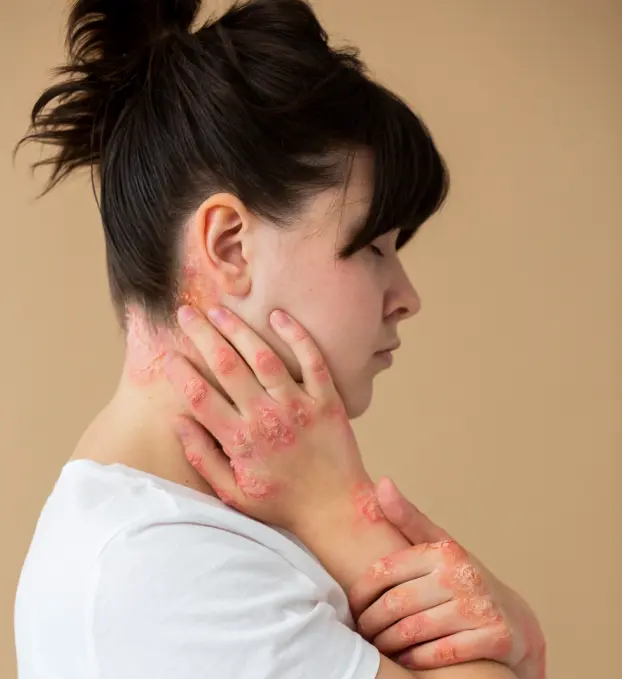
Fungal infection treatment in Nagpur addresses superficial cutaneous infections caused by dermatophytes and yeasts, presenting as itchy, annular erythematous plaques with elevated scaly borders. At Radiance Clinic, our experienced dermatologists provide clinical diagnostic evaluation, potassium hydroxide (KOH) mount testing, and targeted prescription antifungal therapies to clear active lesions and reduce recurrence risk.
Treatment Quick Facts
- First Step
Clinical dermatological examination and bedside potassium hydroxide (KOH) mount evaluation.
- Best For
Ringworm (tinea corporis), jock itch (tinea cruris), athlete's foot (tinea pedis), and recurrent fungal infections.
- Treatment Options Include
Targeted prescription topical antifungals, systemic oral medications, safe supervised withdrawal from steroid-combination creams, and spore eradication guidance.
- Response
Initial symptom relief within days; clinical resolution in 2 to 4 weeks for localized infection, and 4 to 8 weeks or more for widespread, recurrent or steroid-modified tinea.
- Clinical Care Quality
Personalized antifungal regimens calibrated by qualified dermatologists to eradicate fungal hyphae while repairing damaged skin barriers.
- Price
Costs are determined during clinical consultation, depending on diagnostic testing and required medication courses.
What Is a Fungal Skin Infection?
Fungal skin infections are superficial cutaneous infections caused by microscopic fungi, primarily dermatophytes (such as Trichophyton, Microsporum, and Epidermophyton species) and yeasts (including Candida and Malassezia). Dermatophytes thrive on keratin, the structural protein that makes up outer skin layers, hair, and nails.
Common dermatophyte infections include tinea corporis (body ringworm), tinea cruris (jock itch in the groin folds), tinea pedis (athlete's foot), and tinea faciei (facial ringworm). These dermatophyte infections typically present as circular, red, itchy rashes with elevated scaly edges and central clearing. In contrast, tinea versicolor (pityriasis versicolor) is caused by Malassezia yeast and presents as flat, finely scaly patches that appear pale or brown without central clearing. Fungal organisms spread readily through direct skin-to-skin contact, moisture accumulation, gym mats, and sharing towels or unwashed clothing. In warm climates, fungal proliferation accelerates, requiring targeted care from an experienced dermatologist to clear the infection.
Dermatophyte Infections (Tinea / Ringworm)
Dermatophytes consume keratin and advance outward, creating classic ring-shaped lesions with red, raised, actively scaling borders and temporary central clearing. Common variants include tinea corporis, cruris, pedis, and faciei.
Yeast Infections (Malassezia & Candida)
Tinea Versicolor (Pityriasis Versicolor)
Flat, velvety, hypo- or hyperpigmented patches on chest and back caused by Malassezia yeast overgrowth, exacerbated by sweat and humidity.
Cutaneous Candidiasis
Macerated red plaques with characteristic satellite pustules occurring within warm, damp intertriginous skin folds.
Unlike dermatophytes, yeast organisms do not form active elevated ring borders. Dermatologists perform rapid microscopy to distinguish yeast from dermatophyte fungi and prescribe the right antifungal medication.
Distinguishing Fungal Skin Infections, Herpes Simplex, and Eczema
Accurate medical differentiation ensures patients receive the correct antimicrobial therapy rather than inappropriate topical creams.
| Clinical Feature | Fungal Infection (Tinea / Ringworm) | Herpes Simplex (HSV-1 / HSV-2) | Nummular Eczema |
|---|---|---|---|
| Pathogen | Dermatophyte fungi or yeasts | Herpes simplex virus (viral) | Non-infectious inflammatory barrier dysfunction |
| Lesion Morphology | Annular red plaques with active scaly borders and central clearing | Grouped fluid-filled blisters on an erythematous base that crust | Coin-shaped, intensely itchy, oozing or crusted plaques |
| Sensations | Persistent itching aggravated by warmth and sweating | Neuralgic burning, tingling, or shooting pain before vesicles appear | Severe chronic pruritus without a neural prodrome |
| Typical Sites | Groin folds, thighs, torso, feet, and neck | Lips, perioral area, genitals, and buttocks | Extremities, lower legs, and forearms |
| Diagnostic Test | Potassium hydroxide (KOH) mount microscopy | Clinical review or viral PCR swab | Clinical evaluation; KOH test to exclude fungus |
| Primary Care | Prescription topical and oral antifungal medications | Prescription oral antivirals detailed under herpes treatment | Emollients and dermatologist-prescribed anti-inflammatory therapy |
Why Do Fungal Infections Become Chronic or Recurrent?
Many patients struggle with persistent or recurrent ringworm because of environmental factors and widespread self-medication.
Nagpur & Central India Climate
Central India experiences prolonged hot, humid weather and heavy sweating, creating an ideal environment for dermatophytes to multiply in skin folds. Tight, non-breathable clothing traps moisture against the groin, axillae, and torso, encouraging rapid fungal proliferation and frequent seasonal flares during summer and monsoon months.
The Hazard of OTC Steroid Creams
The most common reason fungal infections become chronic is the misuse of over-the-counter combination creams containing potent corticosteroids (such as clobetasol or betamethasone). While these creams temporarily suppress itching and redness, steroids weaken the skin's local immunity, allowing fungal hyphae to invade deeper tissue layers, resulting in thinned skin and stretch marks.
Tinea Incognito & Barrier Collapse
Steroid creams cause altered, harder-to-diagnose infections known clinically as tinea incognito. When the steroid cream is discontinued, the infection rebounds with severe inflammatory exacerbations, burning, and wider skin coverage because the skin's defensive epidermal barrier has been compromised.
Emergence of Resistant Strains
The rise of antifungal-resistant strains such as Trichophyton indotineae makes professional diagnosis and treatment selection more important than ever. Incomplete courses and irrational drug use breed resistant spores. Consulting an experienced dermatologist ensures patients receive steroid-free, evidence-based prescriptions that clear the infection at its source.
Never apply over-the-counter mixed steroid creams to an undiagnosed rash. Professional clinical diagnosis prevents chronic recurrent tinea and permanent skin thinning.
How Is a Fungal Infection Treated by a Dermatologist?
Evidence-based fungal infection treatment involves an individualized clinical approach based on infection extent, anatomical location, and previous medication exposure:
Prescription Topical Antifungals
For localized, single-site infections, dermatologists prescribe modern antifungal creams that inhibit fungal cell membrane synthesis, clearing the rash without causing epidermal damage.
Clinical Note: Prescribed creams must be applied 2 cm beyond the active visible margin on clean, dry skin.
Systemic Oral Antifungal Therapy
For widespread ringworm, thick skin areas, recurrent infections, or steroid-modified tinea, oral antifungal medicines prescribed after consultation are essential. Oral therapy delivers therapeutic drug levels directly to the epidermis from within, clearing deep-seated hyphae.
Clinical Note: Oral dosing is strictly calibrated to individual body weight and accompanied by safety monitoring.
Steroid Cessation & Barrier Restoration
If a patient has used OTC steroid creams, your dermatologist will safely taper off corticosteroids, soothe withdrawal inflammation, and prescribe physiological barrier creams to restore skin integrity.
Clinical Note: Eliminating corticosteroids stops the cycle of immune suppression and heals thinned skin.
Spore Eradication Protocols
Your dermatologist guides you on washing clothing in hot water, ironing garments inside-out, and maintaining dry skin folds to prevent reinfection and domestic cross-transmission.
Clinical Note: Heat deactivates persistent fungal spores trapped within underwear, bedsheets, and towels.
How Do Antifungal Treatment Modalities Compare?
Dermatologists tailor the therapeutic protocol depending on whether the infection is limited to the surface or requires deeper systemic intervention:
| Modality | Primary Indication | Mechanism of Action | Typical Treatment Duration | Key Precautions | Primary Clinical Goal |
|---|---|---|---|---|---|
| Prescription Topical Antifungals | Localized ringworm, jock itch, or superficial body patches | Inhibits ergosterol synthesis in the fungal cell membrane | 2 to 4 weeks (applied 2 cm beyond lesion border) | Apply to completely clean, dry skin; avoid mixing with steroids | Eradicates surface fungal colonization and relieves local itching |
| Systemic Oral Antifungals | Extensive, multi-site, recalcitrant, or steroid-damaged infections | Achieves therapeutic tissue concentrations through bloodstream delivery | 4 to 8 weeks or more based on clinical response | Medical screening for drug interactions, liver health, and cardiac history | Clears deep-seated fungal hyphae and breaks the cycle of chronic recurrence |
| Supportive Antifungal Hygiene | Adjunct care for all active and recovering fungal infections | Eliminates environmental fungal spores and reduces moisture | Ongoing throughout treatment and recovery | Wash clothing in hot water and iron garments inside-out | Prevents domestic cross-transmission and guards against reinfection |
How Is a Fungal Infection Diagnosed Clinically?
At Radiance Clinic, clinical assessment follows a four-step diagnostic protocol to ensure precise medication selection:
Clinical Dermatological Examination
The doctor examines lesion morphology, border activity, central clearing, and distribution patterns across body folds and intertriginous areas to assess clinical presentation.
Bedside Diagnostic KOH Testing
When needed, skin scrapings are collected from the active advancing edge and examined under a microscope using a potassium hydroxide (KOH) mount. This confirms fungal hyphae and spores within minutes, differentiating fungal rashes from eczema or psoriasis.
Medication History & Steroid Screening
The dermatologist screens for past over-the-counter cream use to identify steroid-induced skin damage or atypical tinea presentations such as tinea incognito, guiding safe steroid withdrawal.
Targeted Prescription & Treatment Plan
Your dermatologist prescribes specific topical or oral antifungals calibrated to your body weight, health profile, and infection severity, scheduling clinical follow-up to confirm complete eradication.
Is Fungal Infection Treatment Safe? Precautions and Liver Monitoring
Prescription antifungal treatments are safe and well-tolerated when guided by a dermatologist. During your consultation, our medical team screens for important safety considerations:
Liver & Cardiac Health Screening
Oral antifungal tablets are metabolized by the liver. Dermatologists evaluate your medical history, check baseline liver function if prolonged therapy is anticipated, and review concurrent medications to prevent drug interactions. Cardiac history is also carefully screened, as some oral antifungals have cardiovascular contraindications and are avoided in patients with certain heart conditions.
Pregnancy & Breastfeeding Precautions
Systemic oral antifungals are avoided during pregnancy due to potential fetal risks. Your dermatologist will prescribe pregnancy-safe topical antifungals and barrier solutions to manage symptoms safely without systemic exposure.
Full-Course Clinical Monitoring
Your dermatologist monitors you through the full course and confirms clearance at follow-up. Continuing treatment past initial symptom relief ensures dormant fungal spores are thoroughly cleared, preventing rapid relapse and stopping the recurrence cycle.
Fungal Infection Treatment Cost in Nagpur
Because fungal skin infections range from minor localized patches to extensive, steroid-damaged eruptions, there is no fixed cost for treatment. Total expenses are determined during clinical consultation based on key clinical factors:
Diagnostic Testing
Simple visual examination versus bedside KOH mount microscopy or specialized fungal culture for resistant cases requiring precise organism identification.
Infection Extent & Medication Type
Localized topical creams carry different medication costs than multi-week systemic oral antifungal courses required for widespread, thick-skin, or steroid-modified tinea.
Course Duration & Follow-Up Reviews
Chronic or recurrent infections may require structured follow-up visits to verify clinical and microscopic clearance before medications are safely tapered.
At Radiance Clinic, treatment plans and medication costs are discussed transparently during your initial consultation with our dermatologists.
Who Treats Fungal Infections at Radiance Clinic?
Assessment and treatment planning are guided by experienced dermatologists at Radiance Clinic in Nagpur.

Dr. Nitin Barde
Dr. Nitin Barde is the Founder of Radiance Clinic and a dermatologist with over a decade of clinical experience. He completed his MD in Dermatology in Pune, followed by a Fellowship in Dermatosurgery (FRGUHS) in Bangalore. In 2014, he was awarded the International Society of Dermatologic Surgery (ISDS) Statesmen Award in Jerusalem.
Skin & Aesthetic Dermatology Expertise:
- M.D. Dermatology, Pune: Comprehensive academic and clinical training in dermatology, venereology, and cutaneous fungal infections.
- Fellowship in Dermatosurgery (FRGUHS), Bangalore: Advanced sub-specialization in procedural dermatology and skin barrier restoration.
- Over a Decade of Clinical Practice: Dedicated to evidence-based management of recalcitrant dermatophyte infections and steroid-modified tinea.

Dr. Radhika Barde
Dr. Radhika Barde is the Director and a Dermatologist at Radiance Clinic. She holds an MBBS, a DCH (Diploma in Child Health), and a DDV (Diploma in Dermatology, Venereology and Leprosy), and has completed a Fellowship in Aesthetic Dermatology (FAD). Her clinical practice includes aesthetic and cosmetic dermatology, alongside her focus on female pattern hair loss and diffuse thinning.
Skin & Aesthetic Dermatology Expertise:
- M.B.B.S, DCH, DDV: Dual clinical qualification spanning pediatric health, dermatology, and venereology.
- Fellowship in Aesthetic Dermatology (FAD): Expertise in advanced skincare, gentle medical treatments, and barrier soothing.
- Clinical Background in Aesthetic Dermatology & Skin Health: Special interest in safe, pediatric-appropriate fungal care and sensitive skin management.
About Radiance Clinic
Radiance Clinic in Nagpur provides evidence-informed dermatological care and holds a 4.9-star rating from over 1,800 Google reviews. Our approach to fungal infection treatment is rooted in accurate bedside diagnosis and a personalized consultation, so your treatment plan directly targets the infection while restoring your skin barrier.
The clinic is conveniently located at 2nd Floor, Panchavati Tower, Wardha Rd, beside Hitvada Press & Shatau Hospital, near Dhantoli, Nagpur, open Monday to Saturday. Founded by Dr. Nitin Barde and directed by Dr. Radhika Barde, we provide comprehensive care for recurrent ringworm, tinea incognito, and complex dermatological conditions.
Explore Expert Skin Care Insights
Explore clinical dermatology guides and fungal infection care advice written and reviewed by our dermatologists.

Dry Skin in Winter: A Dermatologist Guide to Winter Skin Care Routine in Nagpur
Winter brings pleasant weather to Nagpur and Central India, but it also brings dry northerly winds and sharp drops in atmospheric humidity. When indoor and outdoor humidity levels drop below 40%, the moisture gradient pulls water out of the stratum corneum through accelerated transepidermal water loss (TEWL). Without proactive routine adjustments, simple dryness quickly progresses into cracked skin, chapped lips, painful heels, or persistent winter itching. This guide explains the physiological mechanisms behind winter skin dehydration, outlines an evidence-based morning and evening winter skin care routine, provides comparison guidance between dry skin and eczema, and presents clinical solutions available at Radiance Clinic in Nagpur.

Dr. Radhika Barde
M.B.B.S, DCH, DDV, FAD
Pigmentation on Face: Melasma vs Sunspots vs Dark Spots - Which Treatment Actually Works
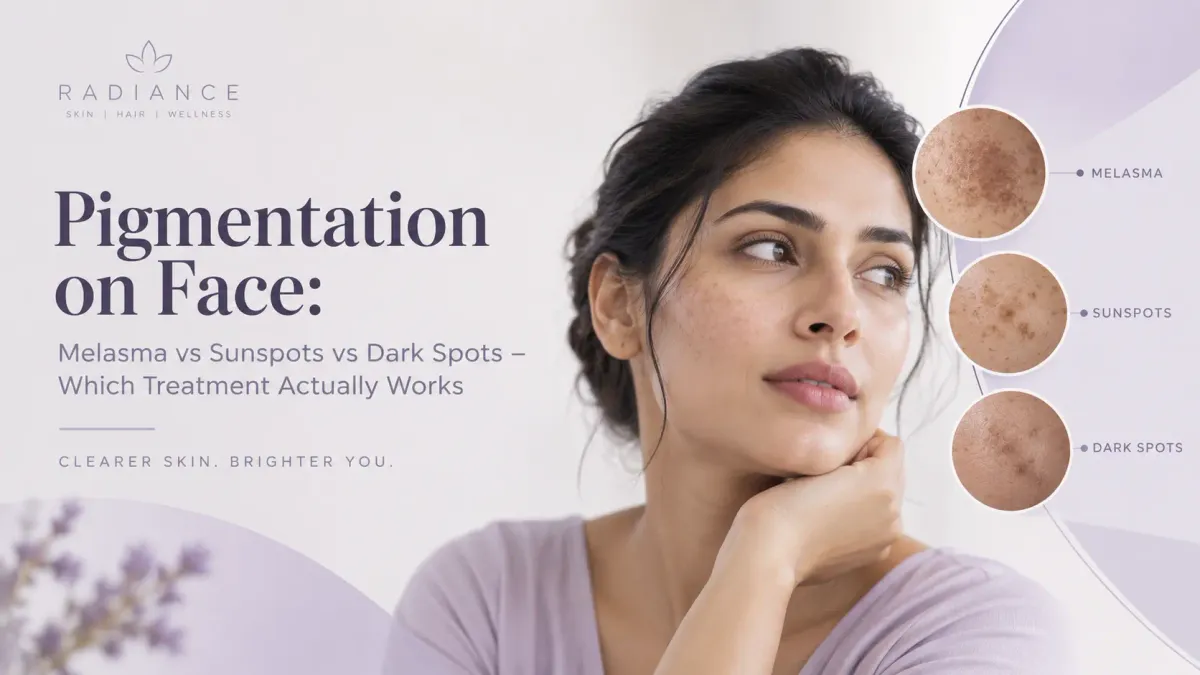
Pigmentation on the face requires targeted treatments rather than a one-size-fits-all approach. Chemical peels and laser pigmentation reduction work well for deep-rooted melasma and post-inflammatory marks, but proper diagnosis is the essential first step. Treating pigmentation early with a dermatologist ensures safe and lasting results for Indian skin tones. Pigmentation on the face requires targeted treatments rather than a one-size-fits-all approach. Chemical peels and laser pigmentation reduction work well for deep-rooted melasma and post-inflammatory marks, but proper diagnosis is the essential first step. Treating pigmentation early with a dermatologist ensures safe and lasting results for Indian skin tones.
Dr. Radhika Barde
M.B.B.S, DCH, DDV, FAD

Acne Scars: Boxcar, Rolling & Icepick and Which Treatment Works for Which Type
Different acne scars require highly specific clinical treatments to see real improvement. Icepick scars respond best to TCA Cross. Boxcar scars improve most with fractional lasers and Dermapen microneedling. Rolling scars require subcision to release tethered skin. Because most people have a complex combination of these scar types, a customized treatment plan from a dermatologist yields the safest and most effective results.

Dr. Nitin Barde
M.B.B.S, M.D, FRGUHS
Trusted by Thousands in Nagpur
Discover why people choose Radiance Clinic for premium treatments.

- ★★★★★
Dr. Nitin is exceptional! PRP sessions significantly helped my hair growth. Best place for hair and skin treatment in Nagpur!
- ★★★★★
Professional care tailored to my health. Dr. Nitin is knowledgeable and patient. Trustworthy clinic with very supportive staff!
- ★★★★★
Smooth, painless hair transplant with excellent post-op care. Feeling more confident already. Best dermatologist in Nagpur! 🤗🙏
- ★★★★★
Saw great improvement in my scalp and hair condition! Dr. Nitin is highly professional and knowledgeable. Highly recommended.
- ★★★★★
Best dermatology clinic in Nagpur! The team is highly experienced and they truly care about their patients' well-being.
- ★★★★★
Highly experienced dermatologist and skilled team. They truly care and provide great results for skin and hair. Great experience!
- ★★★★★
Radiance Clinic offers excellent skin treatment with professional and caring staff. I’ve seen great results and highly recommend it to anyone in Nagpur.
- ★★★★★
I came here for hair laser removal. Very nice service and treatment for fast. The clinic is hygienic and has positive environment. Amazing experience.
- ★★★★★
Friendly and supportive behavior. Perfect treatment and suggestions. Best doctor for skin and hair treatment in Nagpur!

Frequently Asked Questions
Get clarity on our advanced treatments from the leading skin doctor and hair clinic in Nagpur.