Summer Skin Care Routine for Sensitive Skin: A Complete Guide
Summer is one of the most challenging seasons for people with reactive skin. Rising temperatures, intense UV radiation, increased humidity, and heavy sweating can all disrupt the skin’s natural barrier and for those with sensitive skin, the impact is significantly greater. A well planned summer skin care routine for sensitive skin can make the difference between a season of discomfort and one of calm, healthy skin. In this guide, we cover the causes of summer sensitivity, a practical step by step routine, home remedies, and specialist tips for Indian skin and deeper skin tones. Whether you are building your routine from scratch or refining what already works, this article will help you protect and nurture your skin through the warmer months.


Dr. Nitin Barde
Dermatologist & Hair Transplant Surgeon
Why Sensitive Skin Needs Extra Care in Summer
Sensitive skin reacts more intensely to environmental triggers than other skin types. In summer, several factors combine to worsen this reactivity:

- Heat and sweat: High temperatures increase sweating, which disrupts the skin’s pH and creates an environment where irritation and bacterial overgrowth are more likely.
- UV radiation: Sun exposure triggers inflammation, redness, and in some cases, immune-mediated reactions. Even brief sun exposure can cause visible flares in sensitive skin.
- Product overload: Heavier summer products — thick sunscreens, body sprays, and fragranced lotions — frequently trigger contact reactions in sensitive skin types.
- Air conditioning: Moving between outdoor heat and air-conditioned spaces causes rapid temperature changes that dehydrate and destabilise sensitive skin.
Understanding these triggers is the first step in building an effective summer skin care for sensitive skin. Once you know what your skin is reacting to, you can make targeted adjustments to reduce exposure and minimise flare-ups.
Elegance inYour Inbox
Join our curated circle and get 10% OFF on your first visit. Receive medical-grade insights, seasonal trends, and early access.
How to Take Care of Sensitive Skin in Summer
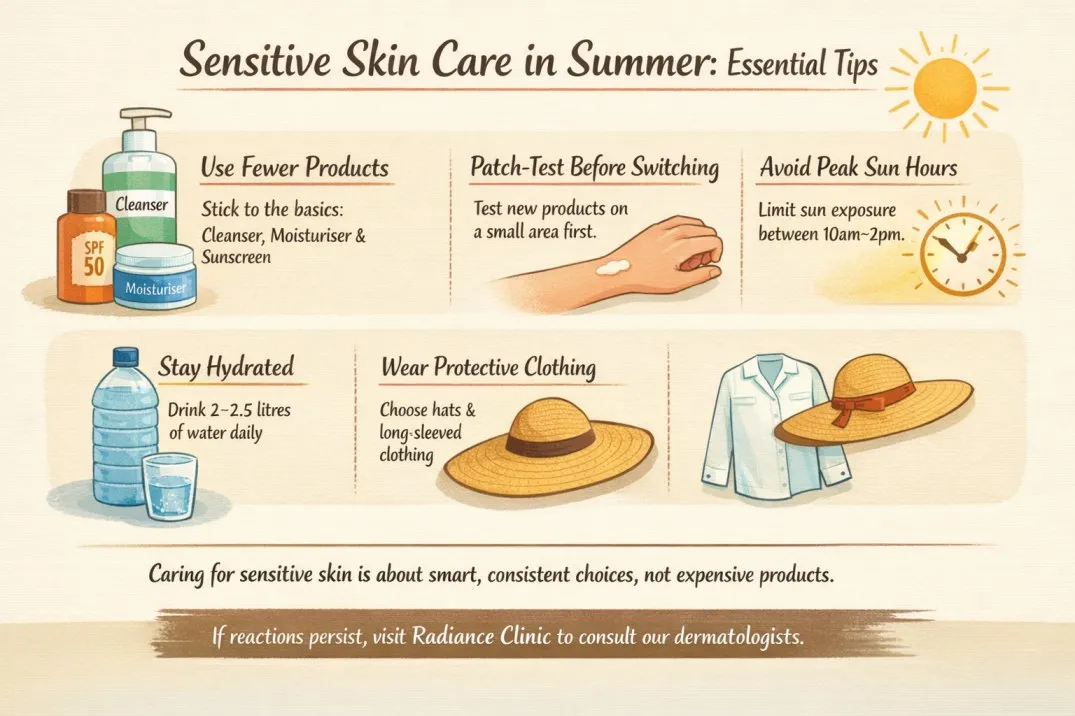 Managing sensitive skin in summer does not require an elaborate routine. In fact, simplicity is one of the most effective strategies. The core principles of how to take care of sensitive skin in summer are:
- Use fewer products: Every additional product is a potential irritant. Pare your routine down to the essentials: cleanser, moisturiser, and sunscreen.
- Patch-test before switching: Before introducing any new product in summer, apply it to a small area of skin and wait 24 hours to check for reactions.
- Avoid peak sun hours: UV intensity is highest between 10am and 2pm. Limit outdoor exposure during this window where possible.
- Stay hydrated: Internal hydration supports skin barrier function. Aim for at least 2–2.5 litres of water daily during summer.
- Wear protective clothing: Lightweight, long-sleeved clothing and wide-brimmed hats reduce direct UV exposure on the face and body.
Learning how to care for sensitive skin in summer is largely about making consistent, informed choices not about spending more on premium products.
If your skin frequently reacts despite following a careful routine, it may be time to consult our dermatologists at Radiance Clinic to identify underlying triggers or conditions.
Elegance inYour Inbox
Join our curated circle and get 10% OFF on your first visit. Receive medical-grade insights, seasonal trends, and early access.
Step-by-Step Summer Skin Care Routine for Sensitive Skin
A consistent sensitive skin care routine in summer should address cleansing, hydration, and sun protection without overloading the skin with activities. Here is a practical morning and evening routine:
Step 1 - Gentle, Fragrance-Free Cleanser
Begin each morning and evening with a low pH, sulfate free cleanser. Look for formulations containing ceramides, glycerin, or colloidal oatmeal, which cleanse without stripping the skin’s natural moisture barrier. Avoid foaming cleansers with sodium lauryl sulfate (SLS), and always use lukewarm never hot water. At night, if you have worn sunscreen or makeup, start with a gentle oil cleanser to dissolve product buildup before following with your regular cleanser.
Step 2 -Hydrating, Alcohol-Free Toner
Apply a calming toner immediately after cleansing while skin is still slightly damp. Choose alcohol-free formulations with soothing ingredients such as hyaluronic acid, rose water, niacinamide, or centella asiatica. Avoid toners containing witch hazel, menthol, or synthetic fragrance, all of which are common irritants for sensitive skin types.
Step 3 - Lightweight, Gel-Based Moisturiser
Heavy creams are rarely appropriate for summer use on sensitive skin. Switch to a water-based or gel moisturiser that provides adequate hydration without creating a thick, occlusive layer that traps heat and sweat. Recommended ingredients include hyaluronic acid, aloe vera, squalane, and ceramides. Apply to slightly damp skin to seal in moisture more effectively.
Step 4 - Mineral Sunscreen (SPF 50, Daily)
Sunscreen is the single most important step in any summer skin care routine for sensitive skin. Choose a mineral (physical) sunscreen containing zinc oxide or titanium dioxide. Unlike chemical UV filters such as oxybenzone and avobenzone, mineral sunscreens sit on top of the skin rather than being absorbed, making them significantly less irritating. Use SPF 50 or higher, reapply every two hours when outdoors, and look for formulations that are fragrance-free, non-comedogenic, and dermatologist-tested.
For those looking to go beyond daily sun protection, our advanced skincare treatments at Radiance Clinic include professional options such as Hydrafacials and Medi-Facials that can support skin hydration and barrier health during summer.
Step 5 - Night Skincare Routine
The evening routine should focus on repair and calm. After double cleansing, apply a soothing serum such as niacinamide, centella asiatica, or a low concentration azelaic acid. Follow with a slightly richer but still gentle night moisturiser. Avoid retinoids and high-strength AHAs or BHAs during periods of significant sun exposure unless specifically directed by a dermatologist, as these increase photosensitivity.
Home Remedies for Sensitive and Dry Skin in Summer
 Several readily available ingredients offer safe, gentle relief for sensitive and dry skin during summer. These home remedies for sensitive and dry skin in summer work best as a complement to not a replacement for a proper skincare routine:
- Chilled Aloe Vera Gel: Pure aloe vera gel, kept in the refrigerator, can be applied directly to sun exposed or irritated skin for immediate soothing relief.
- Rose Water Mist: Spritz pure, preservative free rose water over the face throughout the day to cool, hydrate, and gently tone the skin.
- Cucumber Compress: Chilled cucumber slices or blended cucumber juice applied as a brief mask reduces puffiness and redness thanks to its high water content and natural anti-inflammatory properties.
- Colloidal Oatmeal Mask: Mix finely ground oat powder with cool water to form a paste. Leave on for 10 minutes before rinsing. Oat extract is clinically recognised for its barrier-supporting and anti-itch properties.
- Cold Milk Compress: The lactic acid in cool milk gently soothes, while its fat content provides temporary moisture to dry, reactive skin.
Avoid lemon juice, baking soda, undiluted essential oils, and apple cider vinegar on sensitive skin. These are common causes of chemical burns and contact dermatitis, particularly in summer when the skin barrier is already compromised.
Summer Face Care Tips for Sensitive Skin
Managing sensitive skin face care in summer requires a few additional adjustments beyond your core routine:
- Replace heavy foundation with a tinted mineral sunscreen on warm days to reduce product load while maintaining coverage and protection.
- Use blotting papers to manage midday shine rather than layering powder, which can clog pores and cause breakouts in humid conditions.
- Keep a small bottle of thermal spring water or rose water mist in your bag for midday cooling without disrupting your sunscreen layer.
- Avoid touching or rubbing your face when you are sweating, as this introduces bacteria and spreads irritants.
- Refrigerate your toner and moisturiser for a few hours before use applying cool products to sensitive skin reduces inflammation and provides immediate comfort.
- Introduce any new active ingredients slowly and never during peak summer months unless guided by a skin specialist.
Sensitive Skin Face Care Tips for Summer in India
Summer in India presents a uniquely challenging environment for sensitive skin. A combination of extreme heat, intense UV radiation, high humidity in coastal regions, dry heat in inland areas, and significant air pollution creates multiple simultaneous triggers. Here is how to adjust your approach for the Indian climate:
- Adjust for your region: In humid coastal cities, use lighter, oil free products. In drier inland regions, increase hydration and consider using a humidifier indoors.
- Hard water concerns: Many Indian cities have hard water with high mineral content, which can aggravate sensitive skin over time. Consider using a filtered water spray to rinse your face, or apply a thin layer of barrier moisturiser after washing.
- Choose locally available sunscreens wisely: Several Indian brands now offer mineral or hybrid sunscreens with no white cast that are well-suited to Indian skin tones. Look for SPF 50 PA++++ formulations.
- Be cautious with traditional remedies: While neem, tulsi, and multani mitti (fuller’s earth) are widely used in Indian skincare, they can be too drying or irritating for sensitive skin types. Use sparingly and only in tolerant areas.
- Monsoon season: Do not abandon sunscreen during the monsoon UV levels remain high even on overcast days. Switch to a lighter formula if humidity is causing breakouts.
Navigating sensitive skin in the Indian summer can be complex. If you are struggling to find a routine that works, book an appointment at Radiance Clinic and our specialists will guide you toward a personalized solution.
Special Care Tips for Sensitive Black Skin in Summer
 Sensitive black skin care in summer requires addressing both sensitivity and the specific concerns of melanin-rich skin. A persistent myth is that darker skin tones do not need sun protection this is clinically incorrect.
- Sunscreen is non-negotiable: All skin tones are susceptible to UV-induced damage, photoaging, and skin cancer. For deeper skin tones, the primary visible consequence of unprotected sun exposure is post-inflammatory hyperpigmentation (PIH), which can be difficult to treat and long-lasting.
- Choose the right sunscreen formulation: Traditional zinc oxide sunscreens can leave a visible white cast on darker skin. Opt for tinted mineral sunscreens, hybrid formulations, or newer-generation invisible-finish mineral products.
- Address dryness and ashiness: Darker skin tones can be more prone to visible dryness and ashiness in summer. Use a gel moisturiser with ceramides and squalane to maintain hydration without heaviness.
- Targeted ingredients for PIH: If summer heat and friction worsen existing pigmentation, look for products with niacinamide (10%), vitamin C, or kojic acid all clinically supported for use on sensitive, melanin-rich skin.
- Treat inflammation promptly: In darker skin, any inflammatory response including sunburn, heat rash, or product reactions is more likely to leave a lasting pigmentation mark. Calm inflammation quickly with aloe vera gel or centella asiatica-based products.
When Should You See a Dermatologist?
 While a good at-home routine manages most cases of sensitive skin, there are situations where professional assessment is advisable. You should seek a consultation if:
- Redness, burning, or stinging persists despite switching to a gentle, minimal routine
- You experience recurring rashes, hives, or visible allergic reactions to multiple products
- You suspect an underlying condition such as rosacea, eczema, seborrhoeic dermatitis, or contact dermatitis
- Hyperpigmentation or scarring is worsening after summer flare-ups
- You are unable to identify the product or ingredient responsible for your reactions
A dermatologist can perform patch testing to identify specific allergens, prescribe targeted treatments, and help you build a medically appropriate routine for your skin type.
At Radiance Clinic, we offer a range of specialist treatments including acne treatment, pigmentation treatment, and laser skin rejuvenation for those dealing with persistent or complex skin concerns.
Related Services at Radiance Clinic
If you are dealing with persistent skin sensitivity, summer breakouts, pigmentation, or simply want a professional assessment of your skin health, Radiance Clinic offers a range of specialist treatments designed for all skin types. Here is an overview of services that may be relevant to your summer skincare concerns:
Acne Treatment
Summer heat and sweat frequently trigger or worsen acne, especially in sensitive skin. Our acne treatment program combines clinical assessment with targeted therapies including topical treatments, chemical peels, and light based procedures to address breakouts at their root cause and reduce the risk of post inflammatory scarring.
Pigmentation Treatment
UV exposure in summer is one of the most common causes of hyperpigmentation, melasma, and uneven skin tone concerns that are particularly pronounced in sensitive and melanin rich skin. Our pigmentation treatment protocols are tailored to your specific type of pigmentation and skin tone, using clinically proven interventions to visibly reduce discolouration.
Hydrafacial & Medi-Facial
For sensitive skin that needs professional-grade hydration and gentle resurfacing without downtime, our Hydrafacial and Medi Facial treatments are an ideal choice. These non-invasive procedures deeply cleanse, exfoliate, and infuse the skin with targeted serums, leaving it visibly calmer, brighter, and better hydrated making them especially effective during summer months when the skin barrier is under increased stress.
Laser Skin Rejuvenation
Laser skin rejuvenation targets a range of concerns including sun damage, fine lines, uneven texture, and persistent redness. Our dermatologists assess suitability carefully, as some laser treatments are best planned for post-summer when UV exposure is reduced. A pre treatment consultation ensures you receive the right procedure at the right time for your skin.
Dermatologist Consultation
Not sure where to start? A one-to-one dermatologist consultation at Radiance Clinic is the most effective first step. Our specialists will assess your skin type, identify triggers, review your current routine, and recommend a personalised treatment or skincare plan whether your concern is sensitivity, dryness, acne, or pigmentation.
Frequently Asked Questions
What is the best summer skin care routine for sensitive skin?
Keep your routine minimal: a gentle fragrance-free cleanser, alcohol-free hydrating toner, lightweight gel moisturiser, and mineral SPF 50 sunscreen. Avoid harsh activities, synthetic fragrance, and alcohol-based products. Consistency matters more than complexity.
How to take care of sensitive skin in summer naturally?
Use chilled aloe vera gel, rose water mist, and cucumber-based remedies to soothe irritated skin. Stay well-hydrated, avoid peak UV hours, patch-test all new products, and keep your routine as simple as possible.
Which sunscreen is best for sensitive skin in Indian summer?
Choose a mineral sunscreen with zinc oxide or titanium dioxide, SPF 50 PA++++, fragrance-free and non-comedogenic. For darker skin tones, look for tinted formulations to avoid a white cast. Reapply every two hours when outdoors.
Can I use home remedies on sensitive skin in summer?
Yes, with caution. Aloe vera, rose water, cucumber, and colloidal oatmeal are generally well-tolerated. Avoid lemon juice, baking soda, undiluted essential oils, and anything that has previously caused a reaction on your skin.
Does darker skin need sunscreen in summer?
Yes, absolutely. All skin tones require sun protection. In melanin-rich skin, UV exposure is the primary driver of post-inflammatory hyperpigmentation and uneven skin tone. Choose a formulation without a visible white cast for daily comfort.
How many steps should my summer routine have if I have sensitive skin?
Four steps are sufficient for most people: cleanser, toner (optional), moisturiser, and sunscreen. The fewer products you use, the lower your risk of a reaction. Add further steps only if directed by a dermatologist.