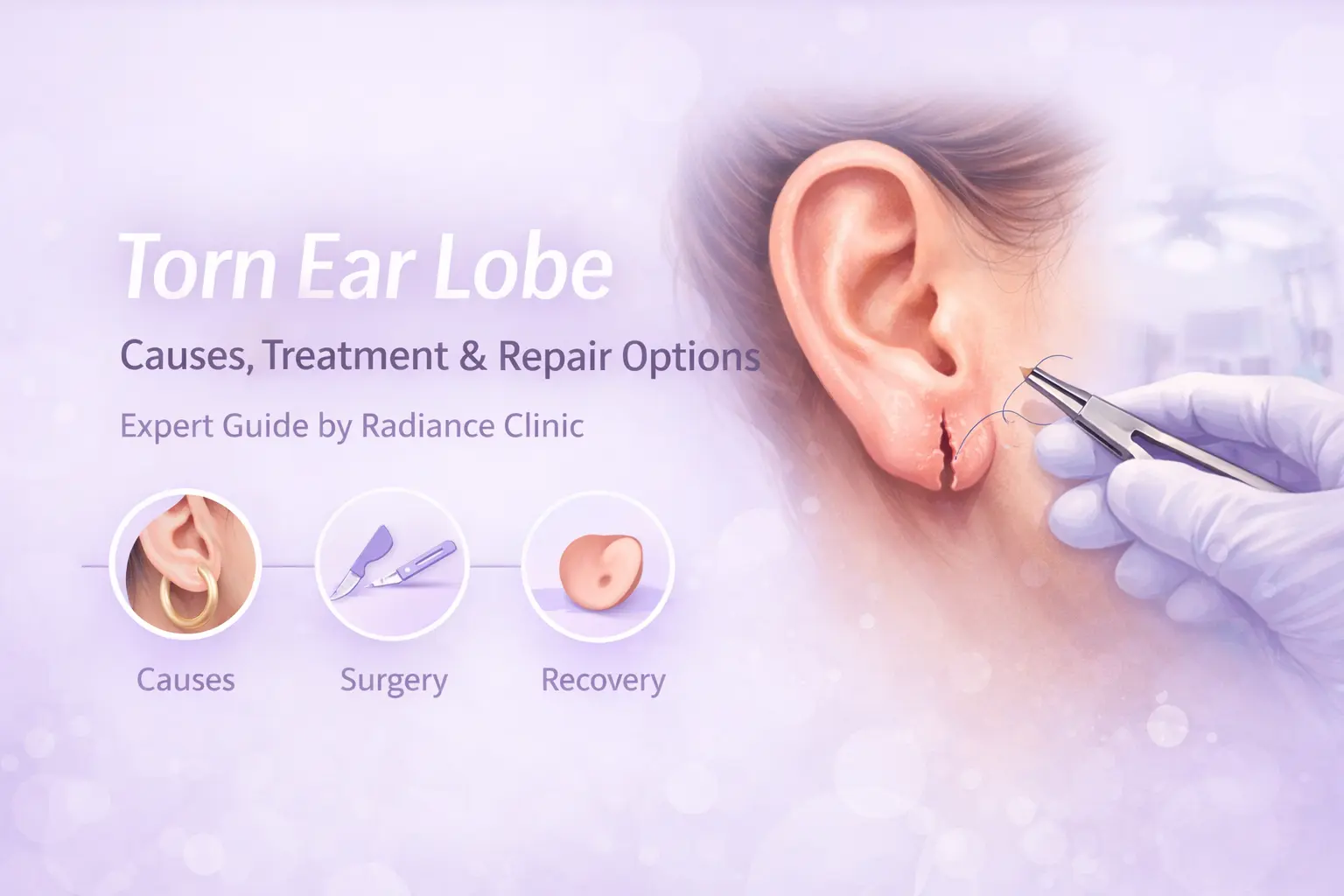
Torn Ear Lobe: Causes, Treatment & Repair Options
A torn ear lobe is one of the most common cosmetic concerns we see at our clinic. Whether the damage happened gradually from years of wearing heavy earrings or suddenly from an accidental pull, a split or damaged lobe can be both physically uncomfortable and aesthetically distressing. The key thing to understand is that a torn ear lobe will not heal on its own once the tissue has fully split. The good news is that torn ear lobe repair is a straightforward, minimally invasive surgical procedure that delivers natural, long-lasting results. In this guide, we explain what causes a torn ear lobe, why it cannot heal without treatment, and how ear lobe surgery can restore both function and appearance.
Dr. Nitin Barde
Dermatologist & Hair Transplant Surgeon
What Is a Torn Ear Lobe?
A torn ear lobe occurs when the soft tissue of the earlobe is damaged, split, or stretched beyond its natural capacity. Tears vary in severity and fall into two main categories:
- Partial tear: The earlobe is stretched or notched but has not completely divided. The piercing hole may appear elongated, widened, or misshapen.
- Complete tear (split earlobe): The lobe has separated into two distinct sections. This is what most people mean by a split earlobe, and it requires surgical repair to correct.
The terms split earlobe and torn earlobe are often used interchangeably. Both describe structural damage to the earlobe tissue, and both benefit from assessment by a qualified specialist. Torn ear lobes are more common than many people realise and affect patients of all ages.
What Causes a Torn Ear Lobe?

Understanding the cause of your torn ear lobe helps your surgeon determine the most appropriate treatment. The most common causes include:
- Heavy earrings: Prolonged wear of large hoops, chandelier styles, or heavy statement pieces places constant downward pressure on the piercing site, gradually thinning the tissue until it tears.
- Sudden trauma: An accidental pull from clothing catching on an earring, a child grabbing a hoop, or a sports injury can cause an immediate and complete tear.
- Gradual stretching: Gauge or plug piercings intentionally enlarge the piercing hole over time. Once removed, the resulting opening is typically too wide to close naturally.
- Aging tissue: As skin loses collagen and elasticity with age, the earlobe becomes more susceptible to tearing even under moderately sized jewellery.
Previous piercing damage: Incorrectly placed piercings, infections, or repeated re-piercing through scar tissue can structurally weaken the lobe over time.
Can a Torn Ear Lobe Heal on Its Own?
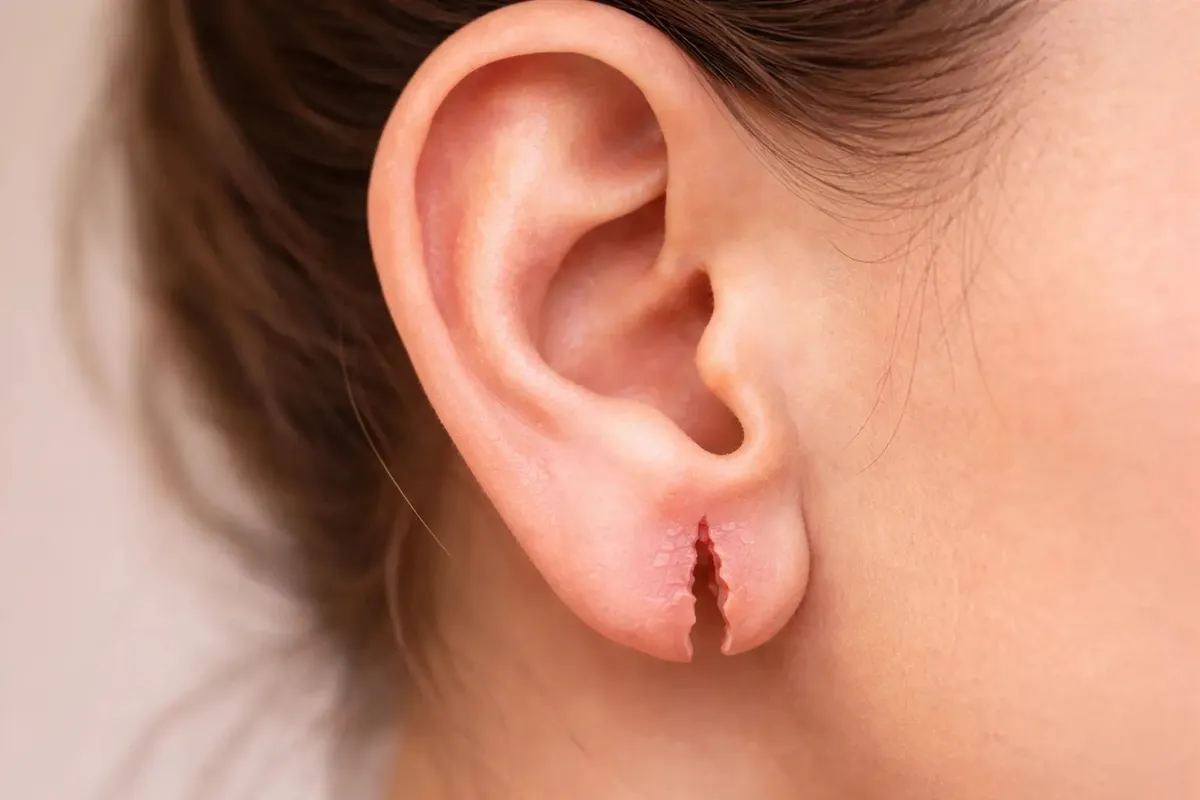
No. A torn ear lobe will not heal or reconnect without medical intervention.
When skin tissue tears apart, the body forms scar tissue along each wound edge. This seals the surface but does not rejoin the two sides of the lobe. If a split earlobe is left untreated, the separated edges may become calloused over time, making future repair more complex.
Many patients attempt home remedies such as surgical tape, adhesives, or compression. While these may temporarily hold the lobe in position, they provide no structural repair and no lasting benefit.
If your tear is partial, seeking an early professional assessment is strongly advisable. Prompt attention may prevent the damage from progressing to a complete split. To understand your options, learn more about our ear lobe surgery.
How Is a Torn Ear Lobe Repaired?
Torn ear lobe repair is performed as a minor outpatient procedure. Most patients are pleasantly surprised by how comfortable and efficient the process is. Here is what to expect:
- Consultation and assessment: Your surgeon examines the tear, discusses your goals, and determines whether one or both lobes require treatment. Clinical photographs may be taken for your records.
- Local anaesthesia: A small amount of local anaesthetic is administered to the earlobe, ensuring you remain comfortable and free from pain throughout.
- Tissue preparation: The scar tissue along the torn edges is carefully removed to create a fresh surface capable of healing and fusing correctly.
- Surgical repair: The freshened edges are brought together and sutured in precise layers to restore the lobe’s natural contour and thickness. The technique is tailored to the specific nature of your tear.
- Dressing and aftercare: A small protective dressing is applied, and you are given full aftercare instructions before leaving the clinic.
The procedure typically ranges from 20 to 45 minutes per ear. Both earlobes can generally be treated in a single appointment. Most patients report very little pain during recovery. For a full overview of what the procedure involves, visit our ear lobe repair surgery page.
Torn Ear Lobe Repair Cost
The cost of torn ear lobe repair varies depending on several factors:
- Whether one or both earlobes require treatment
- The complexity and extent of the tear, including whether gauge stretching is involved
- The surgeon’s level of experience and the clinic’s location
- Whether follow-up appointments are included in the treatment package
As this is a cosmetic procedure, it is not typically covered by standard health insurance. Many clinics offer flexible payment options to make treatment more accessible.
The most accurate way to understand the cost for your specific situation is to arrange a consultation. Your surgeon will assess the tear and provide a clear, personalised quote with no obligation.
Book Your Consultation Today Speak with one of our specialist surgeons about torn ear lobe repair. At Radiance Clinic We assess your earlobe, explain your options, and provide a no-obligation quote. Book a consultation.
Recovery After Torn Ear Lobe Repair

Recovery following ear lobe surgery is generally straightforward and requires minimal downtime.
- Immediately after: Mild swelling or tenderness is normal and typically settles within a few days. Most patients return to usual activities the same day.
- Stitch removal: Sutures are typically removed 5 to 7 days after the procedure at a follow-up appointment.
- Scar healing: A fine scar line is a normal part of healing. In most patients, this fades considerably over three to six months and blends naturally with the earlobe contour.
- Re-piercing: This is usually possible approximately three to six months after surgery, once healing is fully confirmed. Your surgeon will advise on optimal placement.
Patients are advised to keep the area clean and dry, avoid wearing earrings until healing is complete, and follow all aftercare instructions provided by the clinical team.
Before and After Results
The cosmetic improvement following torn ear lobe repair is typically significant. Many patients report feeling noticeably more confident shortly after recovery.
- Cosmetic outcome: The repaired lobe looks natural and symmetrical in the vast majority of cases. The goal is to restore the earlobe as closely as possible to its pre-tear appearance.
- Scar visibility: Initial redness along the repair line is expected. With time and appropriate aftercare, scars typically become nearly imperceptible.
Results vary depending on the extent of the original tear, individual skin type, and healing response. Your surgeon will set realistic expectations during your consultation. View our before and after gallery to see the outcomes we have achieved for our patients.
When Should You See a Specialist?

You should arrange a professional assessment if you notice any of the following:
- Your earlobe has split completely or appears close to doing so
- The piercing hole has elongated noticeably and earrings no longer sit correctly
- You have signs of infection such as redness, swelling, warmth, or discharge
- Scar tissue or keloid formation is developing at or around a previous tear or piercing site
- You feel self-conscious about the appearance of your earlobes
The sooner a torn ear lobe is assessed, the more straightforward the repair is likely to be. Our specialist team is experienced in treating all types of earlobe damage and will advise on the most appropriate course of treatment at your first appointment.
Concerned About Your Ear Lobe? We Can Help. Contact Radiance clinic today to book a consultation with a specialist surgeon. We will assess your earlobe and help you take the right next step — with no pressure and no obligation. Book a consultation.
Related Services at Radiance Clinic
In addition to torn ear lobe repair, Radiance Clinic offers a range of related cosmetic and dermatological treatments. If you have concerns beyond earlobe damage, the following services may be relevant to your care:
Safe, hygienic ear piercing carried out by trained clinical staff. Suitable for new piercings or re-piercing following ear lobe repair, with guidance on aftercare and jewellery selection.
Specialist management of keloid scars that can develop around piercings or areas of skin trauma. Treatment options are tailored to scar size, location, and patient history.
Surgical correction of prominent, thickened, or poorly healed scars. Appropriate for patients who wish to improve the appearance of scarring following previous procedures or injuries.
Minor surgical removal of benign skin lumps, including cysts and lipomas. Performed under local anaesthesia as a day procedure with minimal recovery time.
Injectable treatments used to restore volume, smooth lines, and rejuvenate facial appearance. Also used in earlobe volumization to address thinning or sagging tissue associated with aging.
Frequently Asked Questions
Is torn ear lobe repair permanent?
Yes. When performed by a qualified surgeon, torn ear lobe repair produces durable, long-term results. The repaired tissue heals fully and restores the natural structure of the lobe. To maintain results, patients are advised to choose lighter jewellery and avoid placing repeated stress on the repaired area.
How long does the surgery take?
The procedure typically takes between 20 and 45 minutes per ear. Both earlobes can generally be repaired in a single appointment, and patients are able to return home the same day.
Will there be a visible scar?
A fine scar line forms as part of the natural healing process and is a normal, expected outcome. In most patients, this scar fades significantly over three to six months and becomes nearly imperceptible within the natural contours of the earlobe.
Can I wear earrings again after the procedure?
Yes. Most patients are able to have their earlobes re-pierced approximately three to six months after surgery, once healing is fully complete. Your surgeon will advise on the safest timing and optimal placement.
Is the procedure safe?
Torn ear lobe repair is a routine, low-risk procedure when performed by an experienced, qualified practitioner. As with any minor surgical intervention, there is a small possibility of infection or atypical healing, both of which your surgeon will discuss with you during your consultation. Choosing a reputable, medically accredited clinic significantly minimises these risks.
Book Your Torn Ear Lobe Repair Consultation Restoring a torn ear lobe is simpler than most patients expect. Our surgeons will assess your earlobe, explain your options clearly, and provide a personalised treatment plan with no obligation.Contact us today to Contact us and schedule your consultation.