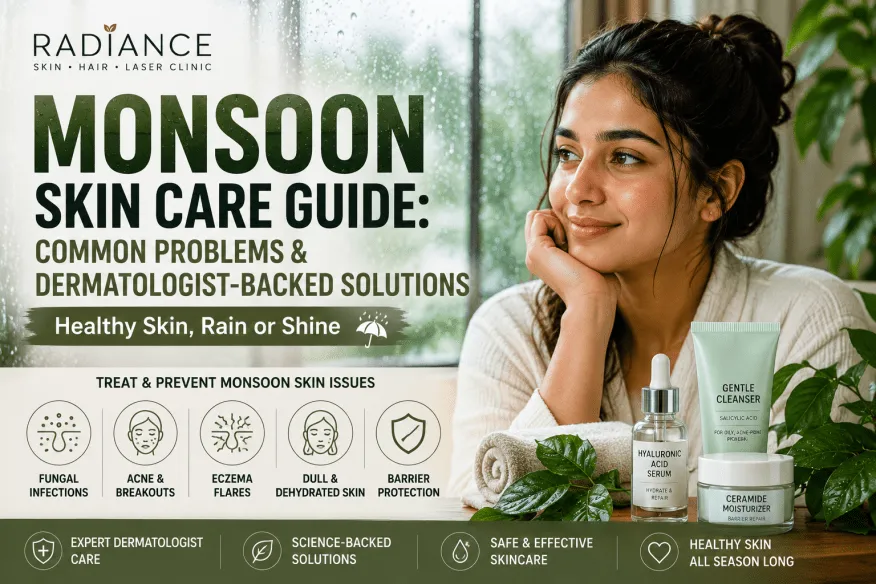
Monsoon Skin Care Guide: Common Problems & Dermatologist-Backed Solutions
High ambient humidity and trapped sweat during the monsoon compromise the epidermal barrier, triggering fungal proliferation, acne flares, and moisture loss. Managing rainy-season skin requires switching to lightweight humectants like hyaluronic acid, using gentle salicylic acid cleansers, maintaining strict hygiene in sweat folds, and seeking early dermatological intervention for persistent rashes or cystic breakouts.

Dr. Radhika Barde
M.B.B.S, DCH, DDV, FAD
Why Nagpur's Monsoon Triggers Acute Skin Complications
The onset of the monsoon brings welcome respite from central India's scorching summer heat, but it also ushers in a drastic microclimate shift. Across Nagpur and the surrounding Vidarbha region, atmospheric moisture remains consistently high from July through September. This prolonged dampness places immense physical and microbiological stress on your cutaneous barrier.
Dermatology clinics across Nagpur routinely observe a pronounced seasonal surge in patients presenting with stubborn fungal infections, pustular breakouts, and eczema flares during these months. When ambient air is saturated with moisture, perspiration cannot evaporate efficiently. Instead, sweat pools on the epidermal surface, blending with sebum, airborne pollutants, and cellular debris. This creates an ideal breeding ground for pathogenic bacteria and dermatophyte fungi. Adapting your daily skin care routine to the demands of rainy weather is essential to prevent chronic inflammation and preserve your skin's clarity.
The Biology of Rainy-Season Skin: How Humidity Compromises the Barrier
To treat monsoon skin issues effectively, one must understand how high humidity and rainwater pollutants alter skin physiology at the cellular level:
1. Unchecked Sebum Oxidation
Elevated temperatures paired with persistent humidity stimulate the sebaceous glands to secrete larger quantities of lipid-rich sebum. When this surplus oil sits exposed on the surface, it oxidizes upon contact with atmospheric pollutants, clogging pores and giving the complexion a dull, darkened, and congested appearance.
2. The Dehydrated-Oily Paradox (Transepidermal Water Loss)
It is entirely possible to suffer from dehydrated skin even in the middle of continuous rainfall. Prolonged sweating pulls vital water molecules from deeper epidermal layers. When you spend hours shifting between air-conditioned indoor rooms and humid outdoor roads, the rapid evaporation of surface sweat leaches moisture away, leaving your skin parched underneath a greasy surface sheen.
3. Disruption of the Cutaneous Acid Mantle
Healthy skin maintains a slightly acidic pH balance around 5.5, which naturally suppresses opportunistic pathogens. Regular contact with acidic rainwater in urban areas and constant sweat accumulation disrupts this acid mantle. Once this barrier is weakened, the skin loses its natural resistance against microbial colonization.
Elegance inYour Inbox
Join our curated circle and get 10% OFF on your first visit. Receive medical-grade insights, seasonal trends, and early access.
5 Common Monsoon Skin Conditions & Clinical Management
1. Superficial Fungal Infections (Ringworm, Jock Itch & Athlete's Foot)
Dermatophytes, the fungi responsible for ringworm (Tinea corporis), jock itch (Tinea cruris), and athlete's foot (Tinea pedis) thrive in warm, moist, dark anatomical folds. Wearing damp clothes, working in rain-soaked footwear, or staying in sweaty gym attire allows these organisms to spread rapidly. Patients often present with raised, circular, itchy red rings with central clearing. Self-medicating with over-the-counter steroid creams must be avoided, as steroids only suppress inflammation temporarily while allowing the fungal colony to invade deeper tissues. If you suspect an infection, seeking professional fungal infection treatment ensures targeted antifungal therapy that eradicates the infection completely.
2. Humidity-Induced Acne & The Overlooked Scalp Connection
Pores become easily congested when oxidized sebum binds with dead epithelial cells under high humidity, fueling the growth of Cutibacterium acnes. However, many patients in central India fail to realize that their recurring forehead and cheek pimples stem from an unmanaged scalp condition. Flakes from active monsoon dandruff (Malassezia yeast) continuously fall onto the face, inflaming facial hair follicles. Achieving lasting results through professional acne treatment requires addressing both your facial skincare and underlying scalp health simultaneously.
Monsoon humidity doesn't just affect your skin. The same warm, damp environment encourages the growth of Malassezia yeast on the scalp, often leading to dandruff, itching, excess oil production, and increased hair fall. If you're noticing scalp flakes or excessive shedding during the rainy season, read our detailed guide on Hair Fall in Monsoon: Causes, Prevention & Treatment to learn how to protect your scalp and hair.
3. Acute Eczema (Atopic Dermatitis) Exacerbations
Sudden temperature fluctuations, damp clothes rubbing against sensitive folds, and mold spore spikes inside poorly ventilated rooms frequently trigger acute eczema flares. The skin develops rough, red, vesicular patches accompanied by severe pruritus (itching). For individuals prone to atopic conditions, specialized eczema treatment focuses on repairing the stratum corneum with ceramide-dominant barrier formulations, preventing secondary bacterial entry.
4. Psoriasis Flares Under Overcast Conditions
Natural ultraviolet (UV) radiation plays a therapeutic role in slowing the accelerated cell turnover of psoriasis. During the monsoon, weeks of overcast skies reduce natural UV exposure, often worsening silvery, scaly plaques. Additionally, damp skin folds increase the danger of maceration and secondary infections around psoriatic lesions. Personalized psoriasis treatment under a dermatologist's guidance helps stabilize disease activity through adjusted topical regimens and targeted light therapies.
5. Seborrheic Dermatitis & Facial Erythema
Characterized by greasy, yellowish scales accompanied by redness along the nasolabial folds, eyebrows, and ears, seborrheic dermatitis flares rapidly when sweat accumulates. Because this condition is driven by an inflammatory reaction to natural yeast, standard moisturizers often aggravate the redness. Consulting a dermatologist for seborrheic dermatitis treatment allows you to safely calm inflammation with medical-grade antifungals and barrier-neutral gels.
The Dermatologist-Approved Monsoon Skin Care Routine
Morning Regimen: Shielding & Oil Balancing
- Gentle AHA/BHA Cleanser: Wash your face with a soap-free cleanser containing salicylic acid or lactic acid. This breaks down excess oil inside the pores without stripping natural hydration.
- Pore-Clarifying Toner: Apply an alcohol-free toner with niacinamide or green tea extract to calm redness, refine pore appearance, and regulate oil output throughout the day.
- Antioxidant Protection: Smooth on a lightweight Vitamin C serum formulated with stabilized L-ascorbic acid to neutralize free radicals from urban rain and air pollution.
- Oil-Free Humectant Hydration: Ditch heavy occlusive creams in favor of an oil-free, water-based hyaluronic acid gel that hydrates thirsty skin cells without feeling greasy.
- Matte-Finish Broad-Spectrum Sunscreen: Rainclouds filter visible sunlight, but a significant amount of ultraviolet rays still penetrates dense cloud cover. Apply a broad-spectrum, non-comedogenic SPF 50 gel sunscreen 20 minutes before heading outdoors.
Nighttime Regimen: Barrier Recovery & Cellular Renewal
- Micellar Double Cleanse: Gently remove sunscreen, water-resistant makeup, and environmental grime with micellar water, followed by your regular foaming face wash.
- Targeted Exfoliation (Twice Weekly): Use a gentle mandelic or lactic acid solution to dissolve dead skin cells. Avoid physical walnut or apricot scrubs, which cause microscopic tears on humid skin.
- Prescription Dermatological Actives: Apply targeted treatments prescribed by your doctor such as retinoids, azelaic acid, or spot serums on clean, dry skin.
- Barrier Night Gel: Seal in your active ingredients with a non-greasy, ceramide- and peptide-infused night gel to support overnight barrier repair.
Clinical Procedures for Monsoon Skin Health in Nagpur
Because incidental sun exposure is naturally lower during the monsoon, this season is considered the ideal window for in-clinic medical aesthetic procedures:
- Medical-Grade Hydra Facial: Provides gentle vortex suction to decongest blackheads, purge trapped monsoon grime, and infuse the skin with clinical antioxidant serums. Explore our specialized Hydra facial treatments in Nagpur to restore your skin's natural radiance.
- Dermatological Chemical Peels: Customized glycolic, salicylic, or mandelic chemical peels accelerate cellular turnover, clear stubborn post-acne pigmentation, and regulate sebum production under clinical supervision.
- Laser Carbon Peel: Often referred to as the "Hollywood Peel," laser facial carbon peels utilize medical liquid carbon and a Q-switched laser to instantly shrink dilated pores, eliminate blackheads, and reduce bacterial load.
Get medical grade glowing skin with advanced treatments using devices like the Deka RedTouch Pro. Book your consultation directly through our website and enjoy ₹300 to ₹500 off compared to Practo consultation prices.
Practical Dos and Don'ts for Humid Weather
Nutritional Support: What to Eat for Clear Skin During Monsoon
Your dietary choices directly influence your skin's resistance against seasonal infections and inflammatory flares:
- Hydrate Constantly: Drink adequate filtered water daily to maintain cellular turgor and facilitate metabolic toxin clearance.
- Prioritize Vitamin C: Include citrus fruits, amla (Indian gooseberry), guava, and bell peppers in your diet to support natural collagen synthesis and strengthen capillary walls.
- Incorporate Zinc & Omega-3s: Consume pumpkin seeds, chia seeds, walnuts, and flaxseeds to naturally regulate sebum production and reduce systemic inflammation.
- Limit Deep-Fried & High-Glycemic Foods: Street snacks like pakoras and sugary sweets cause sharp insulin spikes, which trigger sebaceous hyperactivity and worsen inflammatory acne.
Frequently Asked Questions
Q1: Why does skin break out more frequently during the monsoon?
High atmospheric humidity causes sweat and excess sebum to trap dirt and dead cells inside pores. This anaerobic environment accelerates bacterial growth, leading to inflammatory acne and whiteheads.
Q2: Do I still need a moisturizer if my skin feels oily and sticky?
Yes. Skipping moisturizer dehydrates deeper epidermal layers, prompting your oil glands to produce even more sebum. Switch to an oil-free, hyaluronic acid gel formulation instead of heavy creams.
Q3: How can I prevent fungal infections in rainy weather?
Change out of wet clothing immediately, wear breathable cotton fabrics, keep skin folds dry with dusting powder, and never share towels or personal hygiene items.
Q4: Can scalp dandruff cause pimples on my forehead and back?
Yes. Malassezia yeast and oily flakes from an untreated scalp drop onto your forehead, shoulders, and back, irritating follicles and triggering stubborn acne flares.
Q5: Is sunscreen necessary on cloudy or rainy days?
Yes. Clouds block only a small fraction of UV rays. UVA rays penetrate cloud cover and glass windows, contributing to collagen breakdown, hyperpigmentation, and premature skin aging.
When to Book a Clinical Dermatology Consultation
While an optimized home regimen resolves minor seasonal oiliness, persistent itching, spreading fungal rings, painful cystic acne, or worsening eczema patches require professional dermatological diagnosis. Self-treatment with steroid creams can cause skin thinning, rebound flare-ups, and antibiotic resistance.
For an accurate clinical evaluation and personalized treatment plan, schedule a consultation with the best dermatologist in Nagpur, Dr. Nitin Barde and Dr. Radhika Barde at Radiance Clinic.
Booking consultation from website directly benefits in flat rupees 300-500 off on consultation.